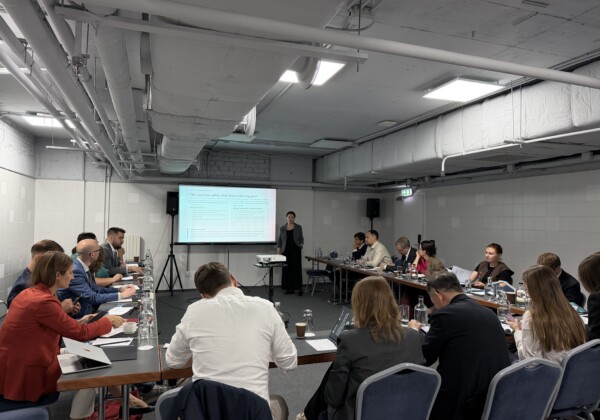
Ukraine continues to accumulate unfulfilled obligations to its international partners. Experts from the RRR4U consortium discussed this during a presentation on the monitoring of the implementation of the new IMF program and EU assistance.

The Council of the EU approved amendments to the Ukraine Plan, paving the way for the mobilisation of additional funding of over €8 billion in 2026, noted Alona Korogod, a project expert at DiXi Group, during her presentation.
At the same time she emphasized, – “It is important to understand that this is not just additional funding. The principle remains the same: more funding means more reforms and more commitments for Ukraine”.
27 new reform milestones have been added to the revised Plan, 10 of which require the adoption of legislative changes. The total number of indicators has increased from 146 to 173, and 34 existing indicators have been revised: for some, the deadlines have been extended; for others, the wording has been clarified or the investment components have been updated to reflect new circumstances.
It is worth noting separately that all final reforms must now be completed by the third quarter of 2027 so that Ukraine can:
- submit its final request for disbursement;
- receive the final tranche of the Ukraine Facility by the end of 2027

The timeline is becoming even tighter. And here lies the main problem – unmet indicators continue to pile up.
“If this trend continues, the potential amount of funding that Ukraine may lose due to delays in implementing reforms already stands at approximately 7.35 billion euros. That is why the timely implementation of reforms today is not only a matter of European integration but also directly a matter of access to financial support from the European Union”, – added Alona Korogod.
The IMF also noted the slow pace of reform implementation during the approval of the first review of the Extended Fund Facility program. Ukraine received a second disbursement of approximately $690 million from the Fund. The updated Memorandum with the IMF contains eight new structural benchmarks, seven of which are fiscal.

Read about them in the presentation.
RRR4U (Resilience, Reconstruction and Relief for Ukraine) is a consortium of four Ukrainian civil society organisations: DiXi Group, the Centre for Economic Strategy / CES, the Institute of Analytics and Advocacy, and the Institute for Economic Research and Policy Consulting.
The event was supported by the International Renaissance Foundation.