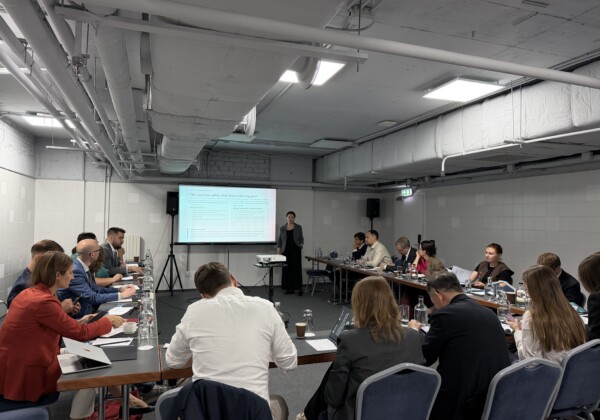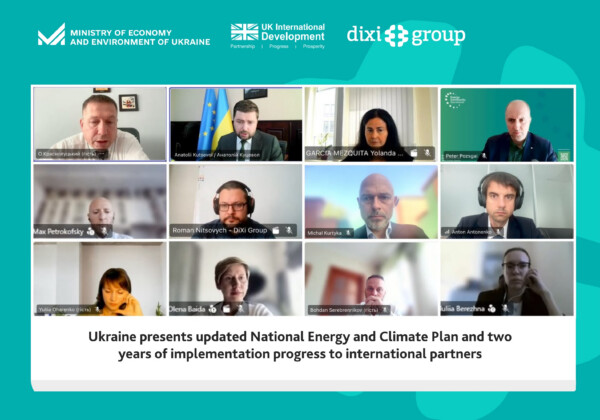
On 9–10 September, the annual General Assembly of the international ANEW-LIFE project took place in Vienna, bringing together European partners, representatives of Ukrainian communities and organisations to discuss the next steps towards strengthening local energy resilience.
The DiXi Group team presented the results of its work on practical energy solutions for communities and opportunities to scale them up. In particular, the team has been assessing six energy projects for Zhytomyr, Kalush and Nizhyn, collecting the data needed to prepare feasibility studies, and exploring potential financing options.
Providing communities with a ready-made set of tools is not enough. Together with the three communities, we want to identify which solutions will work in their specific circumstances, how they can be adapted, and how this experience can later be applied in other cities,” said Viktoriia Kovalenko, DiXi Group General manager on sustainable development.
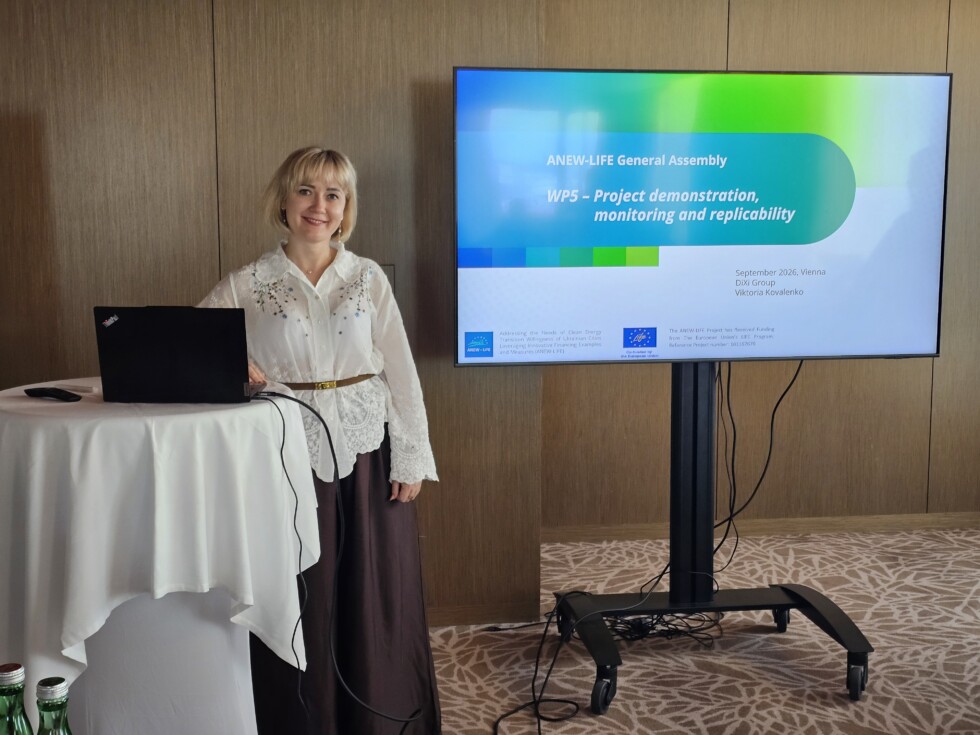
As the partner communities are already familiar with traditional financing approaches, they are now interested in exploring new instruments. DiXi Group is therefore analysing European experience with Power Purchase Agreements (PPAs), as well as opportunities for distributed generation to participate in Ukraine’s electricity market.
Practical tools for communities
At the next stage, the team will focus on developing practical tools that communities will be able to use independently.
One of these will be an Excel-based tool accompanied by a Word template for a rapid assessment of the feasibility of energy projects. It will help communities evaluate projects involving solar generation, modernisation of individual heating substations, installation of solid-fuel boiler systems, and heat pumps.
The team is also finalising a study on PPA mechanisms and a guide to Ukraine’s electricity market and opportunities for distributed generation to participate in it. These materials are intended to help businesses and organisations in local communities attract private investment into energy projects safely and in compliance with Ukrainian legislation. The knowledge and findings generated through this work will also form the basis of an interactive training course.
Another proposal put forward by DiXi Group is to establish ten direct partnerships between Ukrainian and European communities. Rather than limiting cooperation to a formal exchange of experience, the communities would work together on specific energy projects. This approach would combine European technologies and financing solutions with Ukraine’s experience in building energy resilience.
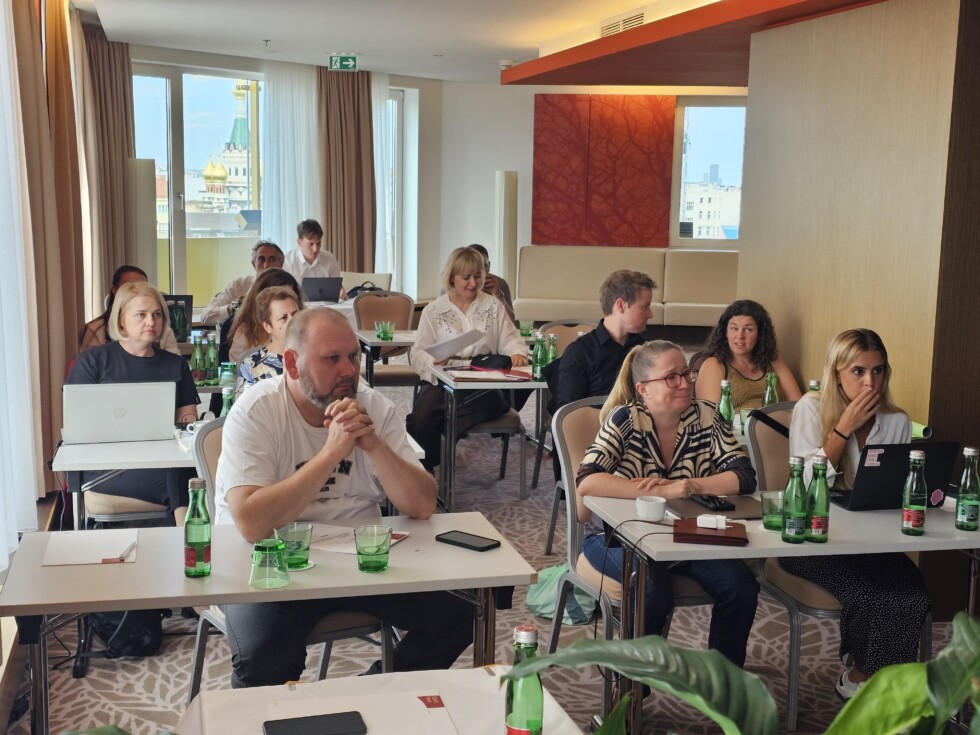
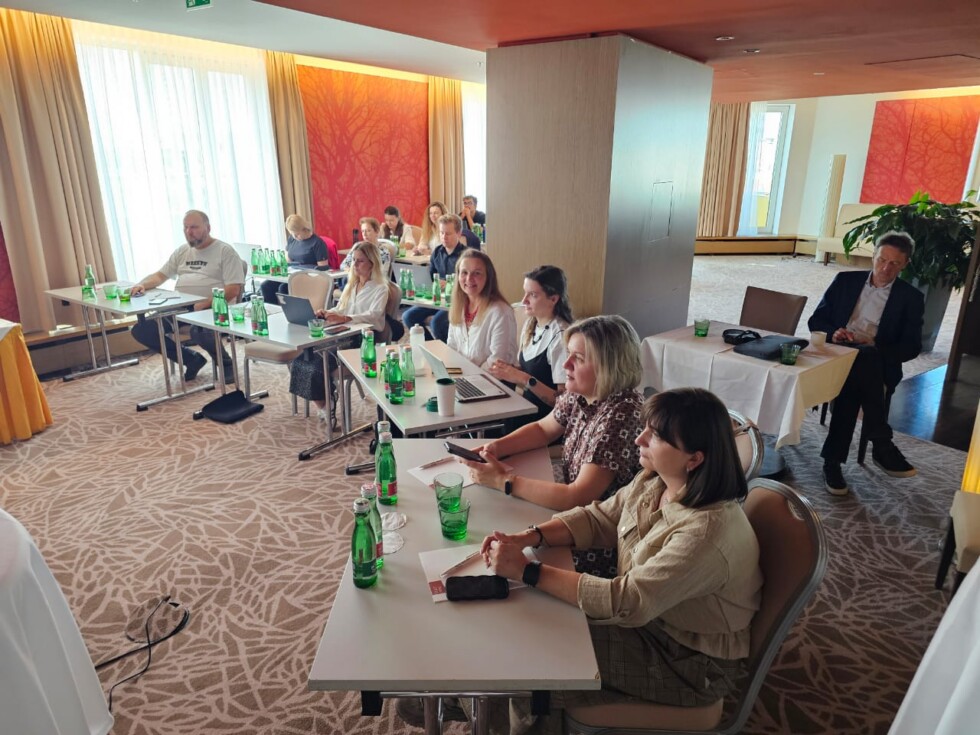
We want the project to result in practical solutions that can be adapted to the needs of other cities. Ukrainian communities have unique experience in maintaining energy resilience, which can also be valuable for European municipalities. This is why we are proposing partnerships in which Ukraine and the EU can combine their respective strengths to deliver joint projects,” Viktoriia Kovalenko emphasised.
How decentralised energy works in Austria
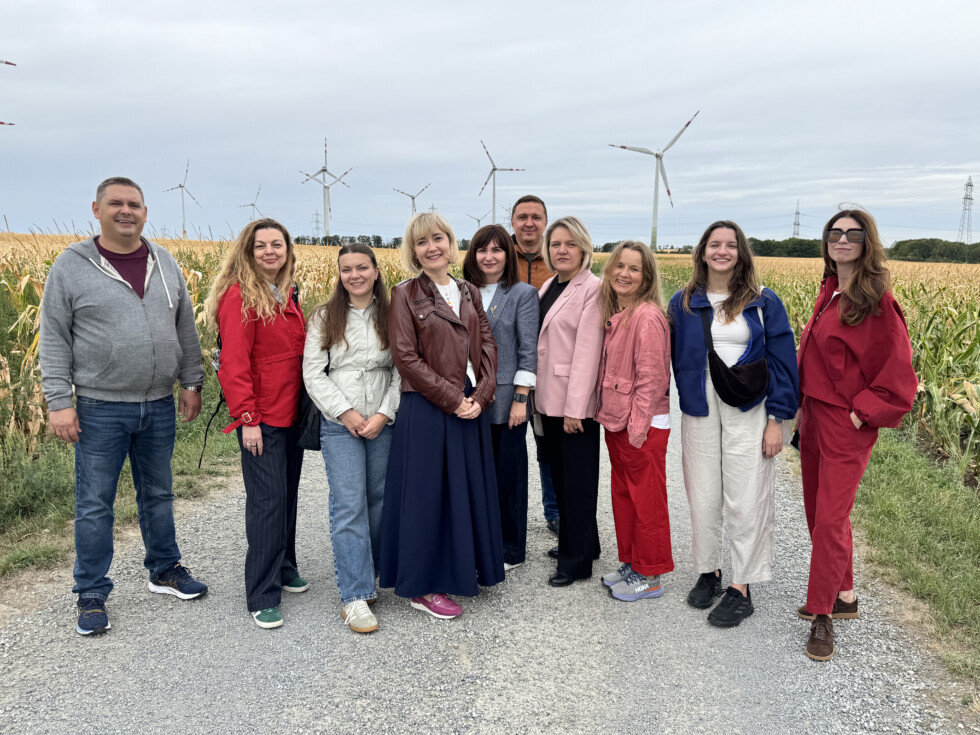
As part of the General Assembly, participants also visited Energiepark Bruck an der Leitha, an Austrian energy park that has been operating since 1995 and combines wind, solar and biogas energy.
During the visit, the delegation explored three key solutions. The wind farm consists of 54 turbines, including a specially designed viewing turbine used for guided tours to help local residents learn more about the technology.
The biogas plant processes local agricultural waste into biogas. This enables energy production regardless of weather conditions, while also providing a solution for waste management and producing organic fertiliser for local farmers.
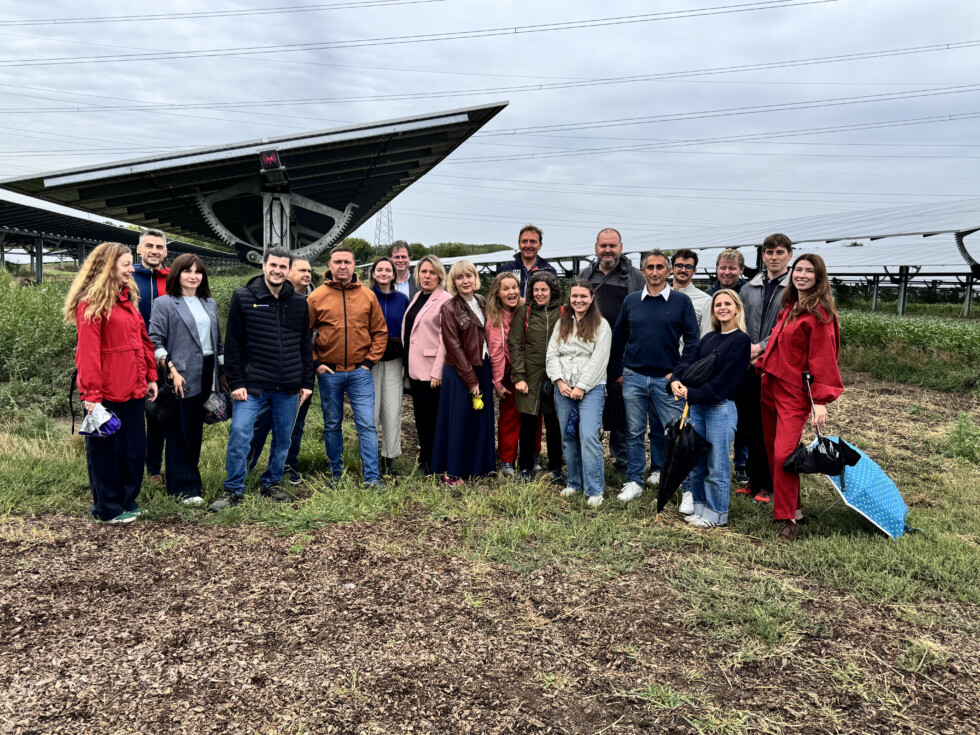
Another solution was the Sonnenfeld agrivoltaic system. Its solar panels are installed in a way that allows the land beneath them to continue being used for growing crops or grazing livestock. The panels can also help protect plants from extreme heat and hail.
For Ukrainian communities, this experience is particularly relevant: decentralised energy generation can help strengthen local energy resilience amid the continuing instability of the energy system.