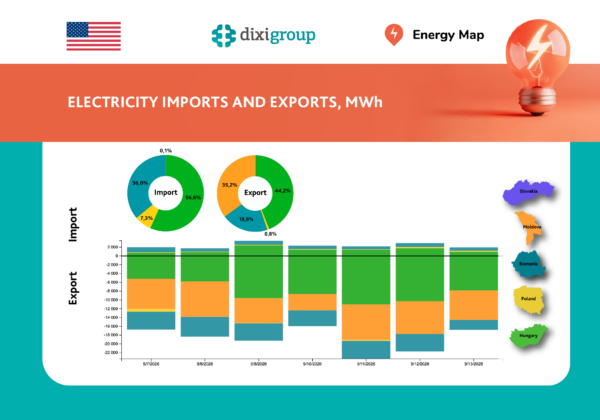
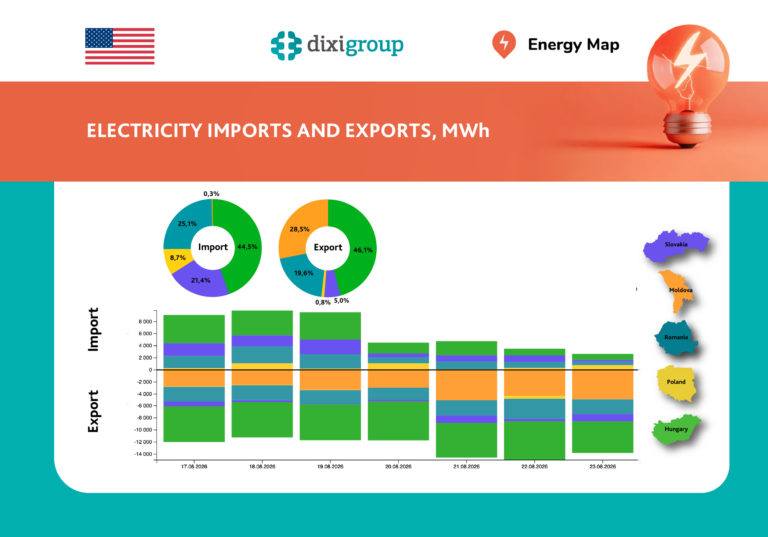
According to Energy Map, from August 17 to 23, electricity imports to Ukraine decreased by 15.2% compared with the previous week, to 43.9 GWh, while exports increased by 46.3%, to 89.9 GWh. Thus, electricity exports were more than twice as high as imports. Moreover, this was the highest weekly export volume since September 2025.
Several factors influenced electricity consumption dynamics during the week. Sunny weather in most regions contributed to high generation from household solar power plants systems and reduced electricity demand from the grid. This is reflected in the hourly trading profile: imports were lowest during the hours of peak solar generation (09:00-17:00), while net imports were concentrated mainly during the evening peak from 18:00 to 22:00. At the same time, higher temperatures during most of the week led to increased use of air conditioners and higher demand.
The return of a nuclear power unit to operation after scheduled maintenance increased available generation. Meanwhile, following previous Russian attacks, several major metallurgical enterprises in Zaporizhzhia and Kryvyi Rih reduced their electricity consumption. The combined effect of these factors became evident from August 20: average daily imports fell by 60%, from 9.5 to 3.8 GWh, while exports increased by 19%, from 11.6 to 13.8 GWh. Thus, the improvement in Ukraine’s electricity trade balance in the second half of the week was driven primarily by lower import needs rather than an increase in export.
Consumer demand during the reporting period was met through domestic generation and commercial electricity imports, with no consumption restrictions imposed.
Import structure by country:
- Hungary – 19.6 GWh (44.5%);
- Romania – 11.0 GWh (25.1%);
- Slovakia – 9.4 GWh (21.4%);
- Poland – 3.8 GWh (8.7%);
- Moldova – 0.1 GWh (0.3%).
Compared with the previous week, imports decreased by 6-56% across most directions, while supplies from Moldova increased by 42%, although volumes remained minimal.
Electricity exports took place every day. At the beginning of the reporting period, daily export volumes were 1.1-1.3 times higher than imports, while from August 20 through the end of the week, exports exceeded imports by 2.6-5.3 times.
Export structure by country:
- Hungary – 41.5 GWh (46.1%);
- Moldova – 25.6 GWh (28.5%);
- Romania – 17.6 GWh (19.6%);
- Slovakia – 4.5 GWh (5.0%);
- Poland – 0.7 GWh (0.8%).
The largest increase among directions with a non-zero baseline was recorded for Slovakia, where exports grew fivefold. Exports to Hungary, Moldova, and Romania increased by 30-53%. In addition, electricity supplies to Poland resumed on August 17 after a two-week break, although they remained sporadic.
The Energy Sector Transparency (EST) project supports key U.S. administration priorities by advancing its energy interests and expanding opportunities for American companies in Ukraine’s energy sector. By strengthening transparency and anti-corruption safeguards, the project helps foster a more predictable, rules-based environment that can support fair competition and encourage investment. Through support for market-oriented reforms and stronger data systems, EST contributes to U.S. economic interests while reinforcing U.S. leadership in the global energy sector.
This report is made possible by the generous support of the United States Government. The contents are the responsibility of DiXi Group and do not necessarily reflect the views of the United States Government.