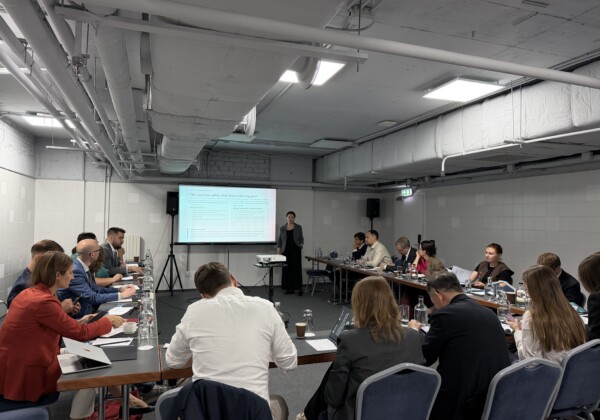
On August 27, DiXi Group held the first training session for ten communities on developing medium-term target programs to implement municipal energy plans. These programs are intended to serve as a practical tool for implementing municipal energy plans at the local level. The training took place as part of the project “Effective Implementation of Municipal Energy Plans in Ukrainian Communities.”
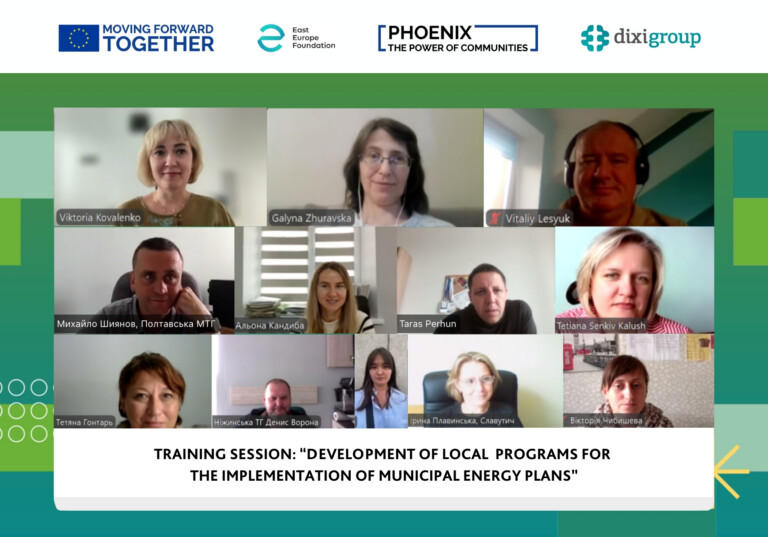
A medium-term program translates the goals set out in the Municipal Energy Plan into a concrete five-year action plan. In it, the community identifies measures and projects, their implementation timelines, responsible parties, necessary funds and sources of financing, as well as expected results. The first such program will cover the period up to 2030.
During the training, participants examined what information the program should contain and in what format: how to transfer data from the Municipal Energy Plan into it, formulate objectives and expected results, and prepare a list of measures. Budgeting for MEP measures emerged as an important topic. The communities considered four ways to allocate funds: through a separate program for implementing the MEP, other local programs, a socio-economic development program, or a budget request.
“We don’t want to just hold a few lectures and provide communities with general information. Participants will work with materials specific to their own communities, analyze their own approaches, and gradually lay the groundwork for future programs. Between sessions, our experts will stay in touch and help them move forward”, – said Viktoria Kovalenko, General Manager for Sustainable Development at DiXi Group.
Using practical examples, participants also examined:
- how to avoid duplicating funding if an energy efficiency measure is already included in another local program;
- how to describe comprehensive projects in which energy efficiency work is just one component;
- and under what conditions the construction of a new facility can be considered an energy efficiency measure.
Experts also presented a new program template that communities can adapt to their own needs.
After the first session, the communities were given the following tasks: to analyze how their SEAP measures are currently budgeted, to choose either their own program template or one proposed by the experts, and to prepare a working list of measures. In early September, the teams will continue this work during practical sessions.
The project involves the territorial communities of Voznesensk, Zlatopil, Sumy, Novovolynsk, Drohobych, Konotop, Poltava, Slavutych, Kalush, and Nizhyn. By February 2027, they will complete theoretical and practical training on implementing the MEP and using tools to monitor it, and will also receive individual consultations from DiXi Group experts.