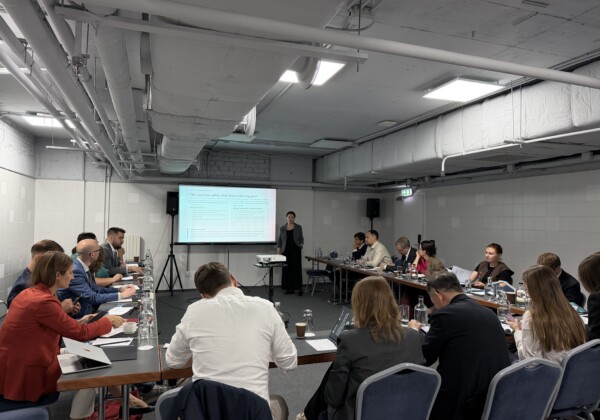
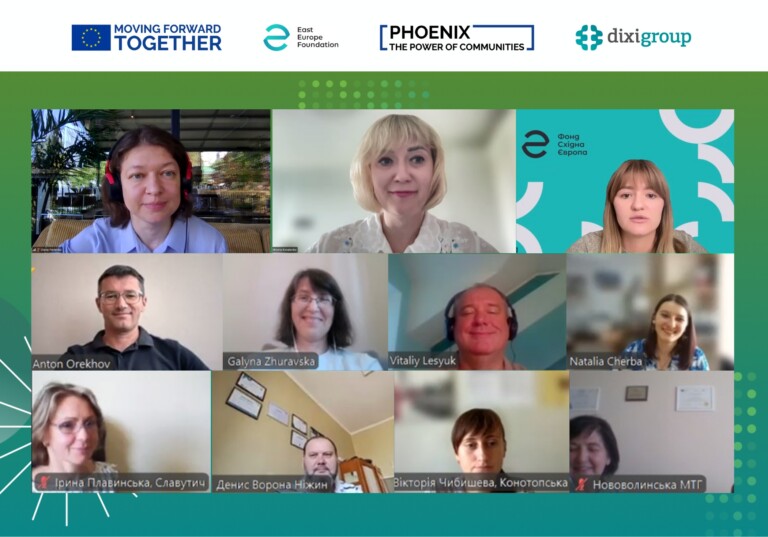
DiXi Group has launched the project “Effective Implementation of Municipal Energy Plans in Ukrainian Communities”. Over the course of seven months – from August 2026 to February 2027 – the team will help ten communities explore the implementation of Municipal Energy Plans (MEPs) in greater depth: analysing their strategic documents, conducting training sessions, and providing individual consultations. The official start of the work was marked by a kick-off meeting with representatives of the participating communities, which took place on 31 July 2026.
“Over the past two years, more than 650 communities have participated in our research on the development and implementation of MEPs, so we understand the practical challenges faced by local teams. A completed document solves the task for only one cycle – after that, everything depends on the team’s ability to review priorities, justify expenditures, and adjust the programme based on data. Our goal is to leave communities not with a stack of papers, but with the capacity to manage energy issues systematically,” said Olena Pavlenko, President of DiXi Group.
An MEP is a strategy for community development in the areas of energy and energy consumption reduction. For the plan to become operational, it needs to be turned into specific measures, for each of which the costs, payback period, sources of financing, responsible persons or organisations, and expected results should be defined in greater detail. The approved Methodology also provides for the development of a medium-term local target programme for the implementation of the MEP and annual monitoring of the implementation of the plans. However, local teams often lack practical tools to detail measures, justify the budget, and establish monitoring of MEP implementation. This is precisely what DiXi Group experts will help them with within the framework of the project.
“Representatives of the communities will take part in theoretical and practical online sessions on developing medium-term programmes for the implementation of MEPs and will then, with individual expert support, introduce tools for monitoring the implementation of the document. In advance, together with the team of experts, we will analyse the MEPs and strategic documents of each community. As a result of our work, we will prepare a Guide for local self-government bodies describing how to develop medium-term programmes for the implementation of MEPs and provide tools for monitoring their implementation,” said Viktoriia Kovalenko, General Manager for Sustainable Development at DiXi Group, speaking about the project’s plans.
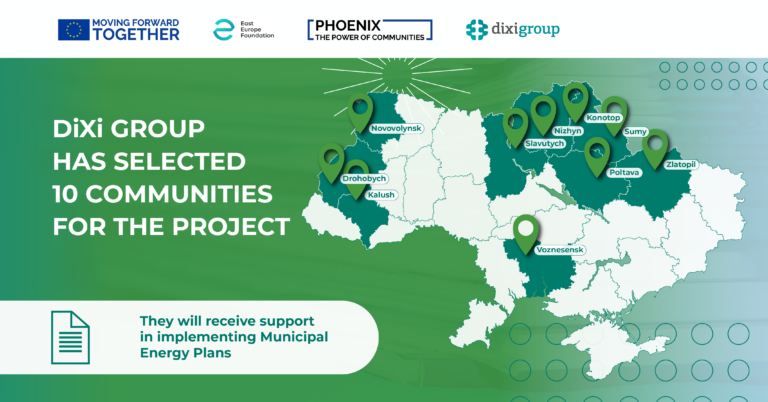
From more than 60 applications, the team preliminarily selected 10 communities from nine regions of Ukraine, including:
- Novovolynsk Urban Territorial Community (Volyn Oblast)
- Kalush Urban Territorial Community (Ivano-Frankivsk Oblast)
- Slavutych Urban Territorial Community (Kyiv Oblast)
- Drohobych Urban Territorial Community (Lviv Oblast)
- Voznesensk Urban Territorial Community (Mykolaiv Oblast)
- Poltava Urban Territorial Community (Poltava Oblast)
- Konotop Urban Territorial Community (Sumy Oblast)
- Sumy Urban Territorial Community (Sumy Oblast)
- Zlatopil Urban Territorial Community (Kharkiv Oblast)
- Nizhyn Urban Territorial Community (Chernihiv Oblast)
The final outcome of the project will be ten communities that systematically manage their energy development and have teams capable of continuing this work independently. The practical guide and the developed tools will become an open resource for all municipalities in Ukraine, regardless of their participation in the project. The task of the DiXi Group team in this project is not simply to help meet legislative requirements, but to ensure that the tools communities receive during the project implementation continue to contribute to community development long after the project has been completed.