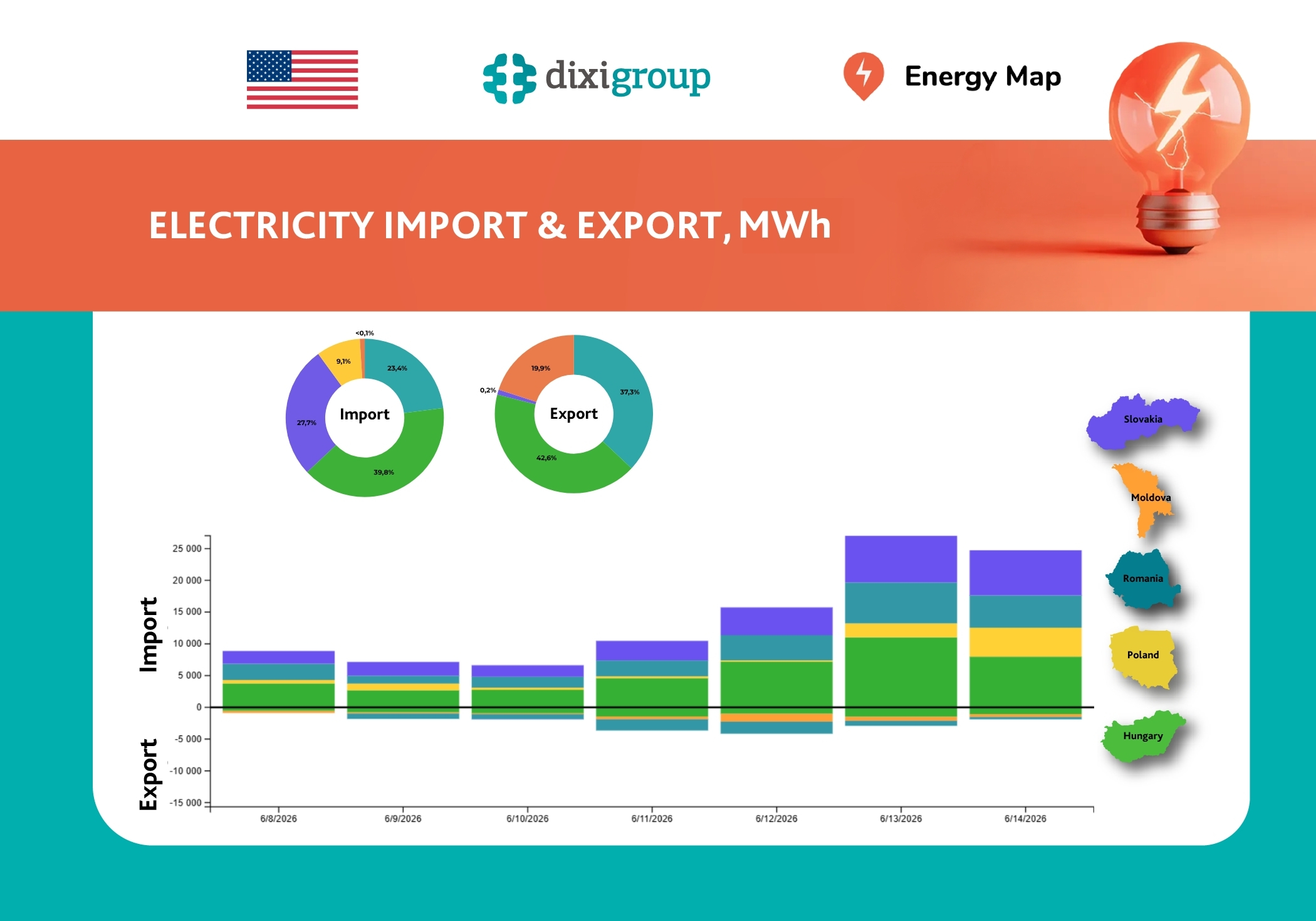
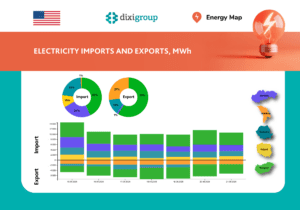
According to Energy Map, during the period of June 15-21, electricity imports to Ukraine decreased by 23% compared to the previous week and amounted to 77.4 GWh. At the same time, exports increased by 2.5 times – to 43.9 GWh, which is the maximum weekly figure since October 2025.
Sunny weather and comfortable temperatures increased the output of household solar power plants and reduced grid load. Additionally, the return of an unbundled nuclear power unit from planned maintenance improved the energy system’s balance. As a result, demand was fully covered by domestic generation and commercial imports, with no consumption restrictions applied.
Import structure by country:
- Hungary – 33.4 GWh (43%);
- Slovakia – 18.6 GWh (24%);
- Romania – 16.8 GWh (22%);
- Poland – 8.0 GWh (10%);
- Moldova – 0.6 GWh (1%).
Compared to the previous week, electricity purchases decreased across most destinations by 13-33%. The only exception was Moldova, where imports increased.
Electricity export was carried out daily throughout the week.
Export structure by country:
- Hungary – 26.0 GWh (59%);
- Moldova – 12.0 GWh (27%);
- Romania – 5.7 GWh (13%);
- Slovakia – 0.2 GWh (1%).
The largest growth was recorded in exports to Slovakia, Moldova, and Hungary. Deliveries to Slovakia increased 5-fold but remained minimal and took place only on June 18 in the evening hours (21:00-23:00). Exports to Moldova and Hungary grew 3.5-fold. Meanwhile, supplies to Romania decreased by 12%, and exports to Poland remained absent.
Despite the growth in exports, Ukraine maintains its net importer status, with imports exceeding exports 1.8-fold by the end of the week.
The EST project supports key U.S. administration priorities by advancing its energy interests and expanding opportunities for American companies in Ukraine’s energy sector. By strengthening transparency and anti-corruption safeguards, the project helps foster a more predictable, rules-based environment that can support fair competition and encourage investment. Through support for market-oriented reforms and stronger data systems, EST contributes to U.S. economic interests while reinforcing U.S. leadership in the global energy sector.
This report is made possible by the generous support of the United States Government. The contents are the responsibility of DiXi Group and do not necessarily reflect the views of the United States Government.