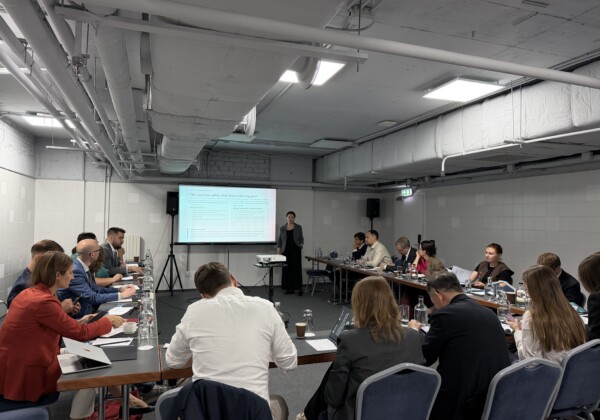
DiXi Group presented the findings of its Summer Outlooks assessment during the online discussion Energy Security Talks: Summer Outlooks – Forecast for Ukraine’s Energy System This Summer. Experts from the think tank assessed the preparedness of Ukraine’s electricity and gas sectors for the summer period and developed a range of scenarios based on weather conditions, the pace of repairs, and security risks.
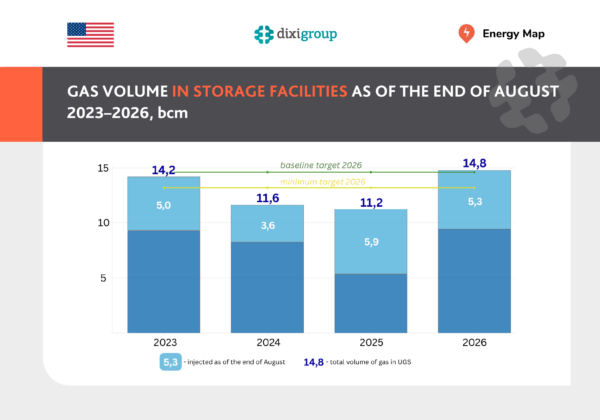
Since October 2025, more than 9 GW of generating capacity has been damaged as a result of Russian attacks. At the same time, more than 1.5 GW of new decentralized generation capacity is expected to come online in 2026. In the gas sector, the key challenge remains accumulating 14.6 bcm of natural gas in underground storage facilities before the start of the heating season, while gas import needs between June and December are estimated at 6.5–7.5 bcm.
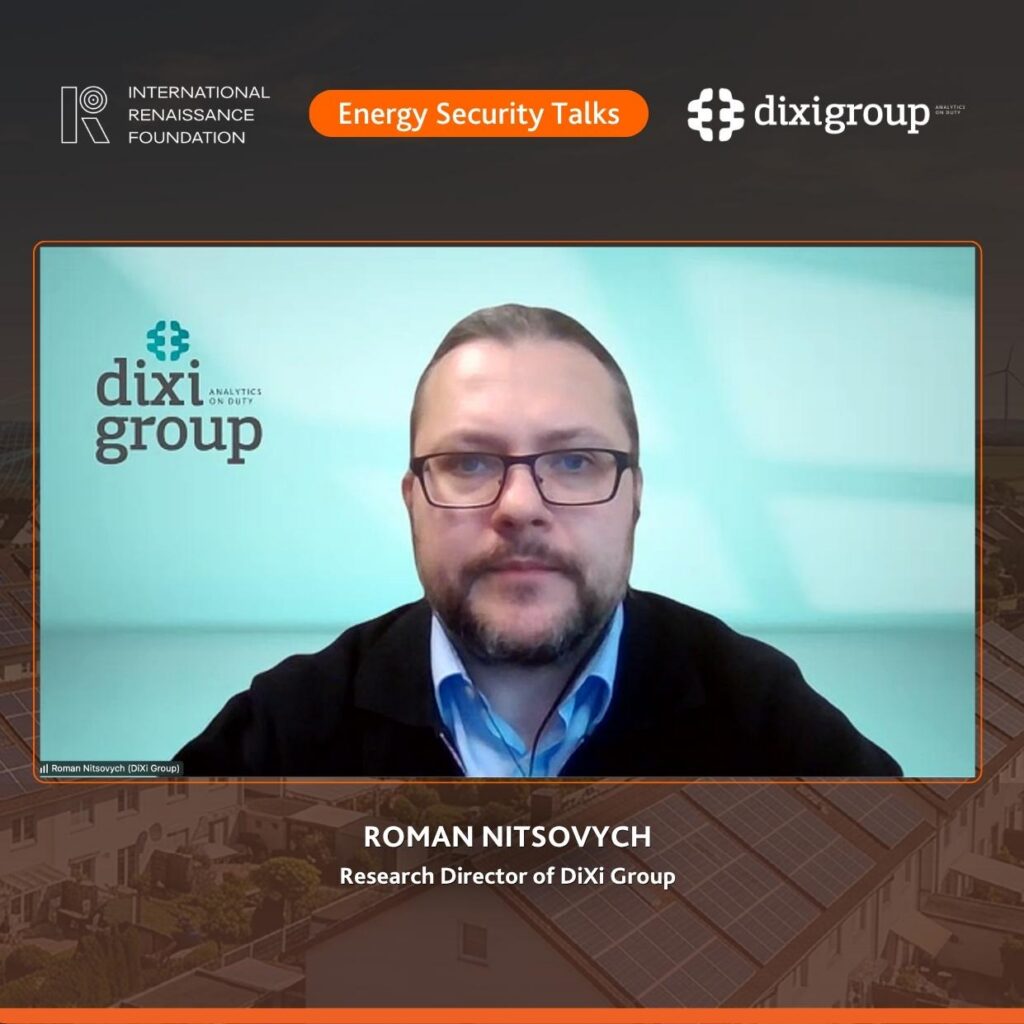
Opening the event, DiXi Group Research Director Roman Nitsovych stressed that the summer period is a critical stage in preparing for the next winter season.
“Summer is a critical window for carrying out repairs, building up reserves, restoring damaged facilities, preparing infrastructure, and testing the solutions that will ensure resilience during the next autumn-winter period,” said Roman Nitsovych.
During the presentation of the Summer Outlooks, Mykhailo Babiichuk, General Manager for Security and Resilience at DiXi Group, outlined the key findings for both the electricity and gas sectors.
“We view summer not simply as a season of lower consumption, but as a period for repairs, resource accumulation, restoration of damaged infrastructure, commissioning new capacity, and testing the resilience of the system against peak demand and potential new attacks,” said Mykhailo Babiichuk.

Electricity: Three Scenarios for Summer 2026
According to DiXi Group, Ukraine’s power system enters summer 2026 following a difficult autumn-winter period and continues to face the consequences of damage to generation facilities and grid infrastructure. Key factors influencing the summer outlook include the repair campaign, electricity import availability, deployment of new decentralized generation, and the risk of further attacks on energy infrastructure.
A particular concern is the flexibility of the power system. Ukraine has suffered its largest losses in thermal generation and combined heat and power (CHP) plants, which previously played a critical role in balancing the system and covering peak demand. Hydropower remains constrained, while solar generation cannot fully compensate for evening deficits. Distributed gas-fired generation is expanding but has so far only partially offset the loss of flexible generation capacity.
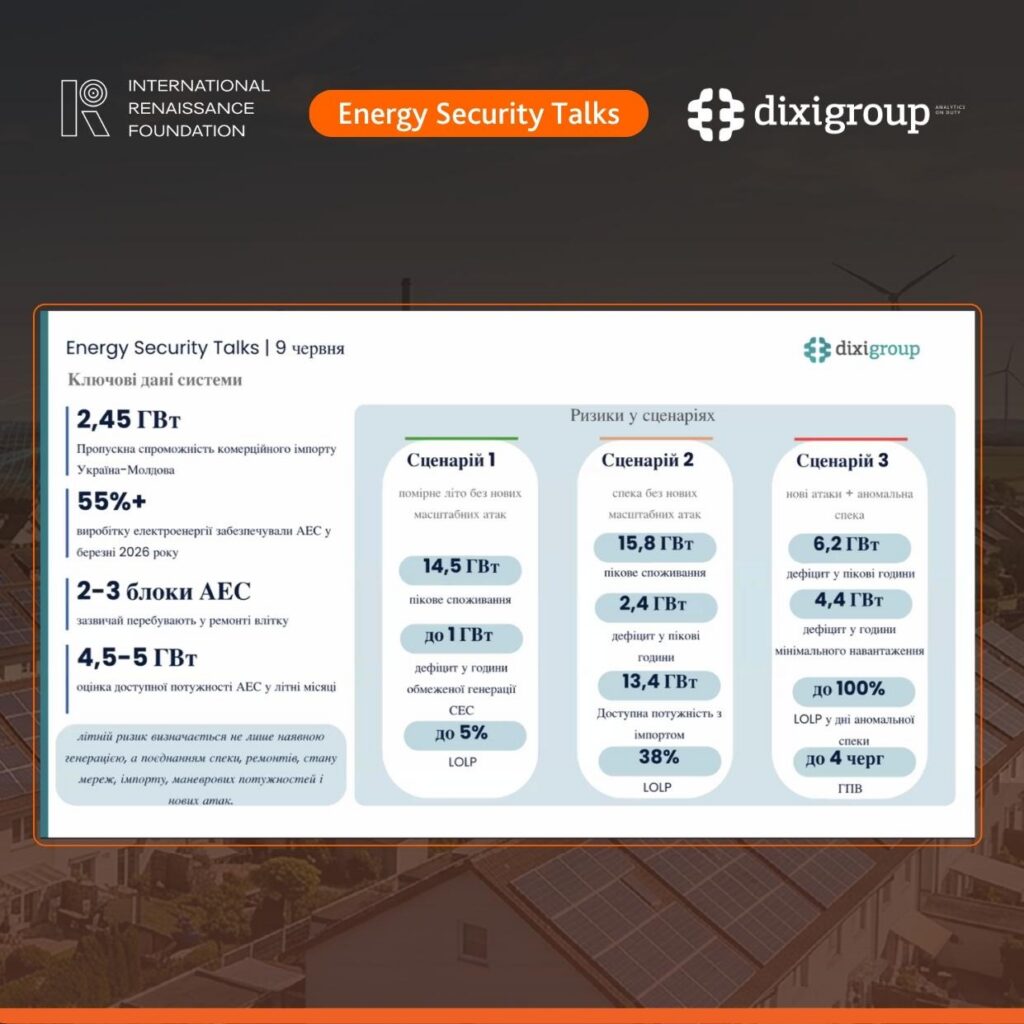
The study considers three possible scenarios for the summer period.
- The baseline scenario assumes moderate weather conditions and no new large-scale attacks. Under this scenario, peak demand could reach 14.5 GW, while the deficit during peak hours would be limited to up to 1 GW. The probability of consumer restrictions is estimated at up to 5%.
- The heatwave scenario assumes abnormally high temperatures without new attacks. Peak demand could increase to 15.8 GW, while the deficit during peak hours could reach 2.4 GW even with electricity imports. The probability of consumer restrictions rises to 38%.
- The worst-case scenario combines renewed attacks on energy infrastructure with extreme heat. Under these conditions, the deficit could reach 6.2 GW during peak hours and 4.4 GW during off-peak periods. During periods of extreme heat, this could require the simultaneous application of up to four groups of scheduled rolling blackouts.
Gas: Storage, Imports, and Financing Will Be Decisive
For the gas sector, summer is the defining period for preparing for the upcoming heating season. Key priorities include injecting gas into underground storage facilities, securing sufficient supply, financing purchases, and protecting gas production infrastructure.
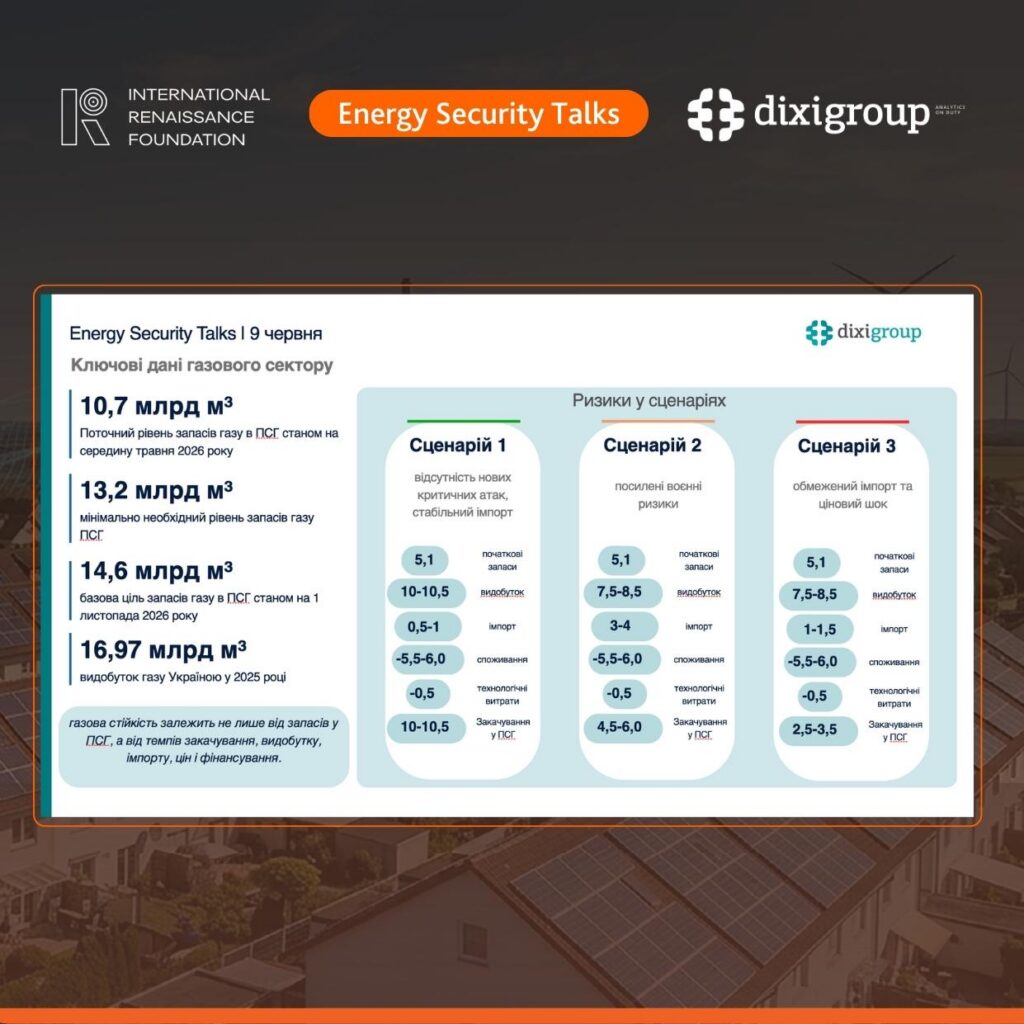
According to DiXi Group, the baseline objective is to accumulate 14.6 bcm of gas in underground storage facilities before winter. Estimated gas import requirements for June–December amount to 6.5–7.5 bcm.
- The baseline scenario assumes no new critical attacks, stable domestic production, and sufficient import availability. Under these conditions, Ukraine would be able to reach the target storage level before the start of the heating season. Gas injections into storage could total 4.5–5 bcm.
- The second scenario assumes intensified Russian attacks on gas production infrastructure reaching the level of large-scale strikes. In this case, domestic production could decline to 7.5–8.5 bcm, while import requirements could increase by 3–4 bcm. Achieving the target storage level would largely depend on financing availability and timely import expansion.
- The highest-risk scenario assumes restricted imports combined with rising gas prices on European markets. Under these conditions, gas injections could fall to 2.5–3.5 bcm, and storage levels ahead of winter could remain below target. This would leave the system significantly more vulnerable to adverse weather conditions, new attacks, or supply disruptions.
The organization of the event was made possible through the support of the International Renaissance Foundation within the framework of the project “Strengthening Ukraine’s Resilience in Energy” (SURE)”.