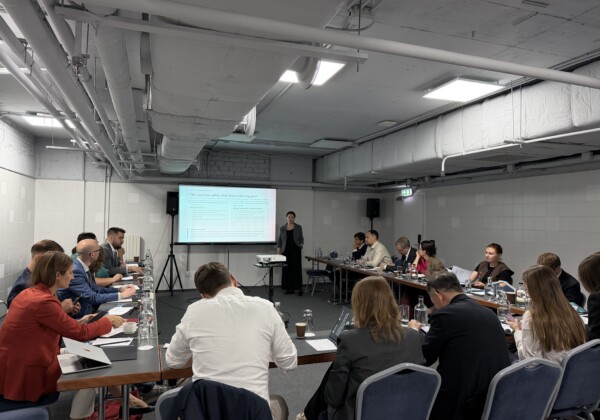
During the presentation of the Summer Outlooks assessment of the summer period in the electricity and gas sectors, a discussion titled “Energy Security Talks: Decentralized Energy in Ukraine—A Temporary Response to the War or a New Model for the Power System?” took place. Experts and market participants discussed what solutions could help Ukraine improve the resilience of its energy system and better prepare for the upcoming heating season. The discussion was moderated by DiXi Group President Olena Pavlenko.

In recent years, gas-powered piston plants, cogeneration, solar power plants with storage systems, and other local solutions have emerged as a response to the collapse of large-scale power generation and the need to ensure the resilience of communities, businesses, and critical infrastructure. At the same time, Ukraine faces the question of whether these solutions will remain merely a set of crisis-response measures or become the foundation of a new energy model.
While discussing possible solutions to enhance the resilience of the power system, participants in the discussion emphasized that the development of decentralized generation requires not only new capacity but also clear rules of the game for investors.
“The entire business model of peaking generation is built on the premise that it must be able to operate when the system needs electricity the most. That is why stable market rules, resolving the issue of debts in the balancing market, and mechanisms for insuring against war risks for new energy projects are critically important for new investments”, – noted D.Trading CEO Dmytro Sakharuk.

The participants in the discussion paid particular attention to the role of gas-fired generation and consumers in the new power system model. According to experts, gas-fired generation will remain one of the key tools for ensuring system flexibility and balancing for a long time to come, especially for meeting the needs of critical infrastructure facilities.
At the same time, decentralization involves not only the construction of new local capacity but also the emergence of new participants in the balancing market and the development of mechanisms for managing the capacity of active consumers.
“The development of new balancing capacity is important for the stability of Ukraine’s power system. Gas-fired generation, as a transitional mechanism for the EU until 2050, will be actively used for balancing, in parallel with the integration of renewable energy sources”, – noted Mykola Kolisnyk, Head of Generation at Naftogaz of Ukraine.
Separately, experts noted the rapid growth in the number of active consumers who combine consumption with their own generation. In the future, they may form energy communities and cooperatives. “It is precisely these models that exemplify true energy decentralization, where the consumer becomes a full-fledged participant in the energy market,” added Mykola Kolisnyk.

Speaking about the long-term outlook, the panelists emphasized that the technologies needed for decentralization are already available, but the key challenge remains defining the future architecture of Ukraine’s power grid. This was the point highlighted by Sergіі Shakalov, CEO and co-owner of KNESS Group.
Olga Savchenko, Senior Partner at Altelaw&Sempra, noted that recent legislative changes are creating additional opportunities for the development of distributed generation, the installation of energy storage systems, and new investment projects. At the same time, for the full-scale launch of these new mechanisms, it is necessary to expedite the adoption of secondary regulations and resolve the issue of debt in the energy market.

The participants in the discussion also emphasized the need to develop mechanisms for aggregating small-scale generation capacity, engaging active consumers in the electricity market, enhancing communities’ ability to implement local energy projects, and creating conditions for scaling up energy storage systems.
Summarizing the study’s findings, Mykhailo Babiychuk noted that the summer of 2026 will serve as a test of Ukraine’s ability to prepare for the coming winter while simultaneously rethinking the power system to make it more flexible, localized, resilient, and less vulnerable to future threats.
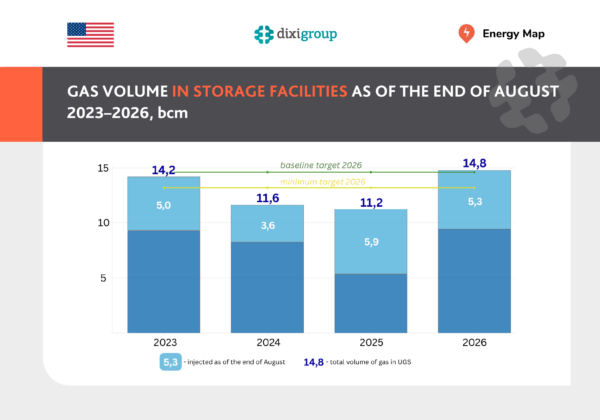
Not only will the ability to get through the winter of 2026/27 depend on the pace of energy infrastructure repairs, gas stockpiling, the development of new generating capacity, and the system’s ability to respond to new challenges, but so will the shaping of the future architecture of Ukraine’s energy system.
The organization of the event was made possible through the support of the International Renaissance Foundation within the framework of the project “Strengthening Ukraine’s Resilience in Energy” (SURE)”.