According to data from the Energy Regulator of Ukraine (NEURC) published on the Energy Map portal, gross natural gas consumption in Ukraine amounted to 9.2 bcm in the first quarter of 2026. This is 2% more than in the same period of 2025 (9.0 bcm).
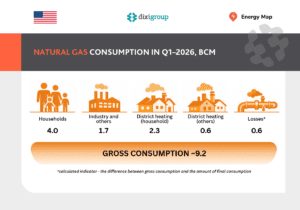
The increase in demand was driven primarily by residential and industrial sectors. Households consumed 4.0 bcm of gas, which is 20% more compared to the first quarter of 2025. Consumption by industry and other business entities rose to 1.7 bcm (+17%).
In the district heating sector, trends varied depending on the purpose of use. District heating companies (TKE) supplying heat to households increased consumption to 2.3 bcm (+7%). At the same time, companies supplying heat to other consumers, particularly public sector institutions, reduced gas usage to 0.6 bcm (-39%).
It is worth noting separately the gas losses, which amounted to approximately 0.6 bcm in the first quarter of 2026. This is a calculated figure defined as the difference between gross consumption and the total volume of final consumption across all consumer categories.
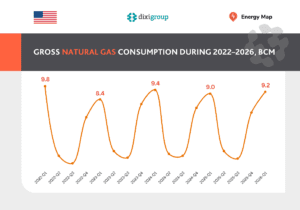
In the first quarter of 2023, amid the full-scale invasion, natural gas demand declined sharply to 8.4 bcm, down 14% compared to the same period in 2022. Since then, the market has shown relative stability, with first-quarter consumption remaining within the range of 9.0-9.4 bcm during 2024-2026.
The EST project supports key U.S. administration priorities by advancing its energy interests and expanding opportunities for American companies in Ukraine’s energy sector. By strengthening transparency and anti-corruption safeguards, the project helps foster a more predictable, rules-based environment that can support fair competition and encourage investment. Through support for market-oriented reforms and stronger data systems, EST contributes to U.S. economic interests while reinforcing U.S. leadership in the global energy sector.
This report is made possible by the generous support of the United States Government. The contents are the responsibility of DiXi Group and do not necessarily reflect the views of the United States Government.