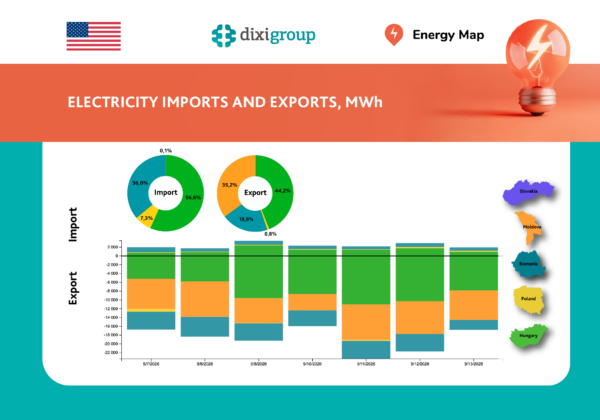
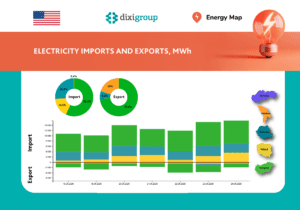
According to Energy Map, between May 18 and 24, electricity imports to Ukraine increased by 10% compared to the previous week, reaching 90.1 GWh. At the same time, exports remained at the previous week’s level and totaled 17.7 GWh.
The balancing of the power system during the week was ensured through domestic generation and electricity imports. No electricity consumption restrictions were imposed on households or businesses.
Import structure by country:
- Hungary – 53.4 GWh (59.3%);
- Romania – 23.3 GWh (25.8%);
- Poland – 13.1 GWh (14.5%);
- Moldova – 0.3 GWh (0.4%).
The most significant increase was recorded in electricity supplies from Moldova, which rose 5.8 times compared to the previous week. Imports from Romania increased by 39%, from Hungary – by 15%. At the same time, supplies from Poland decreased by 29%, and no electricity imports from Slovakia were recorded during the reporting period.
Electricity exports were carried out daily during certain hours of the day. Moreover, on May 22 and 23, exports continued uninterrupted throughout the entire day for the first time since October 2025.
Export structure by country:
- Hungary – 13.0 GWh (73.7%);
- Moldova – 3.6 GWh (20.0%);
- Romania – 1.1 GWh (6.3%).
Supplies to Hungary increased by 14%, while electricity exports to Moldova and Romania decreased by 20% and 38%, respectively. Export to Slovakia and Poland were absent during the reporting period.
The EST project supports key U.S. administration priorities by advancing its energy interests and expanding opportunities for American companies in Ukraine’s energy sector. By strengthening transparency and anti-corruption safeguards, the project helps foster a more predictable, rules-based environment that can support fair competition and encourage investment. Through support for market-oriented reforms and stronger data systems, EST contributes to U.S. economic interests while reinforcing U.S. leadership in the global energy sector.
This report is made possible by the generous support of the United States Government. The contents are the responsibility of DiXi Group and do not necessarily reflect the views of the United States Government.