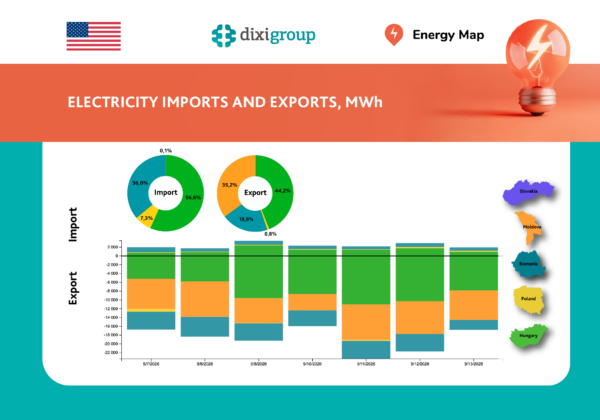
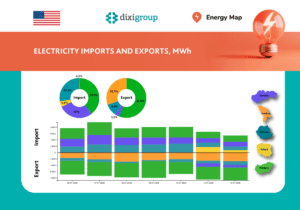
According to Energy Map data, electricity imports to Ukraine fell by 18.1% week-on-week to 52.9 GWh during the period of July 6-12. Meanwhile, exports rose by 75.5% to 54.3 GWh. As a result, Ukraine ended the week as a net electricity exporter, with exports exceeding imports by 1.4 GWh (or 2.5%).
Despite continued Russian attacks on Ukraine’s energy infrastructure, including a massive strike on July 6 that caused power outages in several regions, no electricity consumption restrictions were imposed. The power system remained balanced through domestic generation and commercial electricity imports.
Weather conditions remained a key factor in stabilizing the power system. Following the period of extreme heat, lower temperatures reduced electricity demand due to decreased use of air conditioners. In addition, predominantly sunny weather throughout most of the week supported high output from residential solar power plants, reducing the need for electricity from the grid.
Import structure by country:
- Hungary – 20.9 GWh (39.5%);
- Slovakia – 14.8 GWh (28.0%);
- Romania – 14.6 GWh (27.5%);
- Poland – 2.5 GWh (4.8%);
- Moldova – 0.1 GWh (0.2%).
Compared to the previous week, electricity purchases decreased by 1-72% across most directions. The exception was Romania, from where imports rose by 33%.
Electricity exports took place every day, and on July 8, 11, and 12, daily export volumes exceeded imports.
Export structure by country:
- Hungary – 30.3 GWh (55.8%);
- Moldova – 16.6 GWh (30.7%);
- Romania – 5.4 GWh (9.9%);
- Slovakia – 2.0GWh (3.6%).
Compared to the previous week, exports increased by 52%-125% across all directions.
The EST project supports key U.S. administration priorities by advancing its energy interests and expanding opportunities for American companies in Ukraine’s energy sector. By strengthening transparency and anti-corruption safeguards, the project helps foster a more predictable, rules-based environment that can support fair competition and encourage investment. Through support for market-oriented reforms and stronger data systems, EST contributes to U.S. economic interests while reinforcing U.S. leadership in the global energy sector.
This report is made possible by the generous support of the United States Government. The contents are the responsibility of DiXi Group and do not necessarily reflect the views of the United States Government.