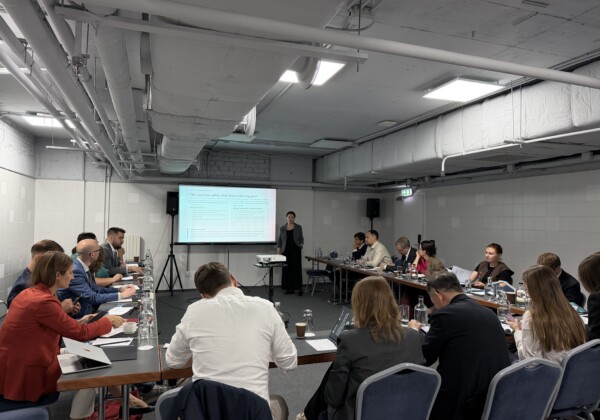
Ukraine continues to adapt to evolving Russian tactics targeting energy infrastructure while accumulating unique experience that can help European countries strengthen their own energy security. This was highlighted by Olena Pavlenko, President of DiXi Group, during the POLITICO Energy & Climate Forum, dedicated to the resilience of energy systems in the face of modern threats.

According to Pavlenko, the nature of Russian attacks has changed significantly since the beginning of the full-scale invasion. While in 2022 strikes were directed at individual generation facilities, today attacks target entire energy systems and involve large-scale use of missiles and drones simultaneously.
“We have built three, and in some cases four, layers of protection for the energy system. We are building resilience at three levels: national, local, and personal – because after many winters without stable electricity supply, Ukrainians are trying to strengthen their own energy security. So we are doing everything possible to prepare for winter. But Russia constantly changes its tactics and may deploy new ones this autumn, and we must be ready for these challenges,” said Olena Pavlenko.
The expert paid special attention to the role of renewable energy in strengthening energy security. In her view, the development of distributed generation helps reduce risks associated with the uneven distribution of energy resources between regions.
“One of Russia’s tactics is to divide energy-proficient regions from energy-deficient ones. Expanding renewable energy generation across the country helps reduce this threat and increases the resilience of the energy system against attacks,” she stressed.
At the same time, Olena Pavlenko cautioned that in the context of transition to a decarbonized system, protecting balancing capacities that will support renewable energy generation becomes particularly important. While today in Ukraine this role is performed by thermal and hydropower, in a decarbonized system the priority is, first and foremost, the protection of hydroelectric power plants and energy storage systems.
Finding the balance between digitalization of the energy sector and its protection from cyber threats remains a challenge as well. She noted that the more decentralized and digitalized an energy system becomes, the more questions arise regarding data openness.
“Businesses, investors and communities need access to information, but at the same time it is important not to create additional opportunities for an aggressor to obtain data on potential targets,” Pavlenko noted.
She also highlighted the importance of creating strategic stockpiles of equipment for energy infrastructure. According to the President of DiXi Group, the European Union should consider establishing reserves of transformers and other critical grid components that may be required for the rapid restoration of electricity systems following damage.
Even if sufficient financial resources are available, critical equipment cannot be obtained instantly. It needs to be manufactured, delivered and installed. Therefore, creating stockpiles and expanding industrial manufacturing capacity in Europe should become one of the priorities of energy security.
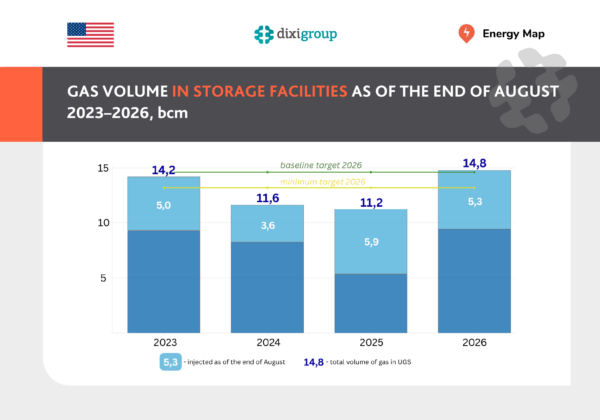
At the same time, Ukraine continues to strengthen its preparedness for the winter season, including by increasing gas stocks and deploying cogeneration units across the country.
According to the expert, Ukraine’s experience demonstrates that energy security today depends not only on generation capacity, but also on the ability to rapidly restore damaged infrastructure, maintain reliable supply chains for critical equipment, and combine digitalization with an adequate level of protection for critical data.
Participation in the events was also made possible through the support of the International Renaissance Foundation within the framework of the project “Strengthening Ukraine’s Resilience in Energy” (SURE)”.