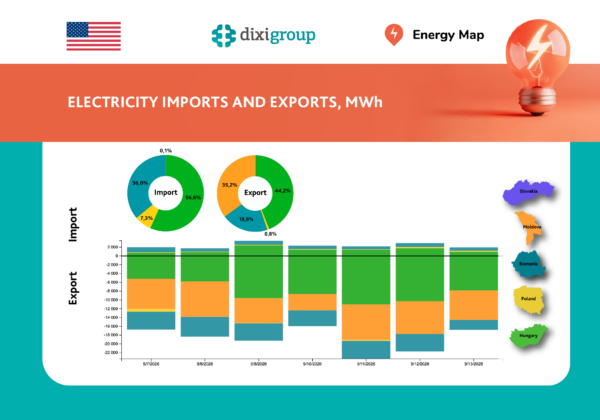
According to Energy Map, during the period from April 6 to 12, Ukraine increased electricity imports by 8% to 144.7 GWh. At the same time, exports dropped sharply – by 88% to 2.2 GWh and were carried out on only four days.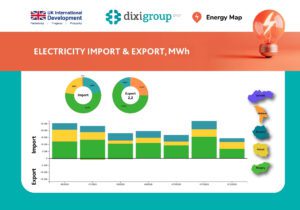
The power shortage in the power system remained under the influence of several factors. In particular, the consequences of russian strikes continue to limit available generation. In addition, weather conditions further complicated the situation: colder temperatures and cloud cover led to increased electricity consumption while simultaneously reducing output from solar power plants. The balance was also affected by scheduled maintenance at nuclear power plants and a reduction in generation at combined heat and power plants following the end of the heating season.
A separate influencing factor was the restoration, effective April 1, by NEURC of differentiated price caps on the day-ahead market (DAM), intra-day market (IDM) and the balancing market, which reduced the economic attractiveness of electricity imports during certain hours. As a result, for nearly the entire week (with the exception of April 12), demand-side restrictions were applied to balance the power system.
Despite these restrictions, imports remained an important tool to cover the deficit. Supply volumes increased by 14-26% from most destinations, with the exception of Moldova (-39%), while imports from Slovakia were absent during the reporting period.
Import structure by country:
- Hungary – 79.0 GWh (54.6%);
- Romania – 32.7 GWh (22.6%);
- Poland – 32.2 GWh (22.3%);
- Moldova – 0.8 GWh (0.5%).
Electricity exports were limited and intermittent, occurring primarily during nighttime hours – on April 6-8 (00:00-06:00) and April 12 (22:00-00:00).
Export structure by country:
- Hungary – 1.4 GWh (64.3%);
- Moldova – 0.6 GWh (24.9%);
- Romania – 0.2 GWh (10.8%).
Electricity exports to Slovakia and Poland were absent. Overall, export volumes decreased by 86–91% across all directions.
The publication was prepared with the financial support of the UK Agency for International Development under the project “Mainstreaming National Energy and Climate Plan for Ukraine’s Green Recovery and Strengthening the Green Transition Office” implemented by DIXI GROUP NGO. The contents of the publication are the sole responsibility of DIXI GROUP NGO and under no circumstances can be considered to reflect the position of the UK Agency for International Development.