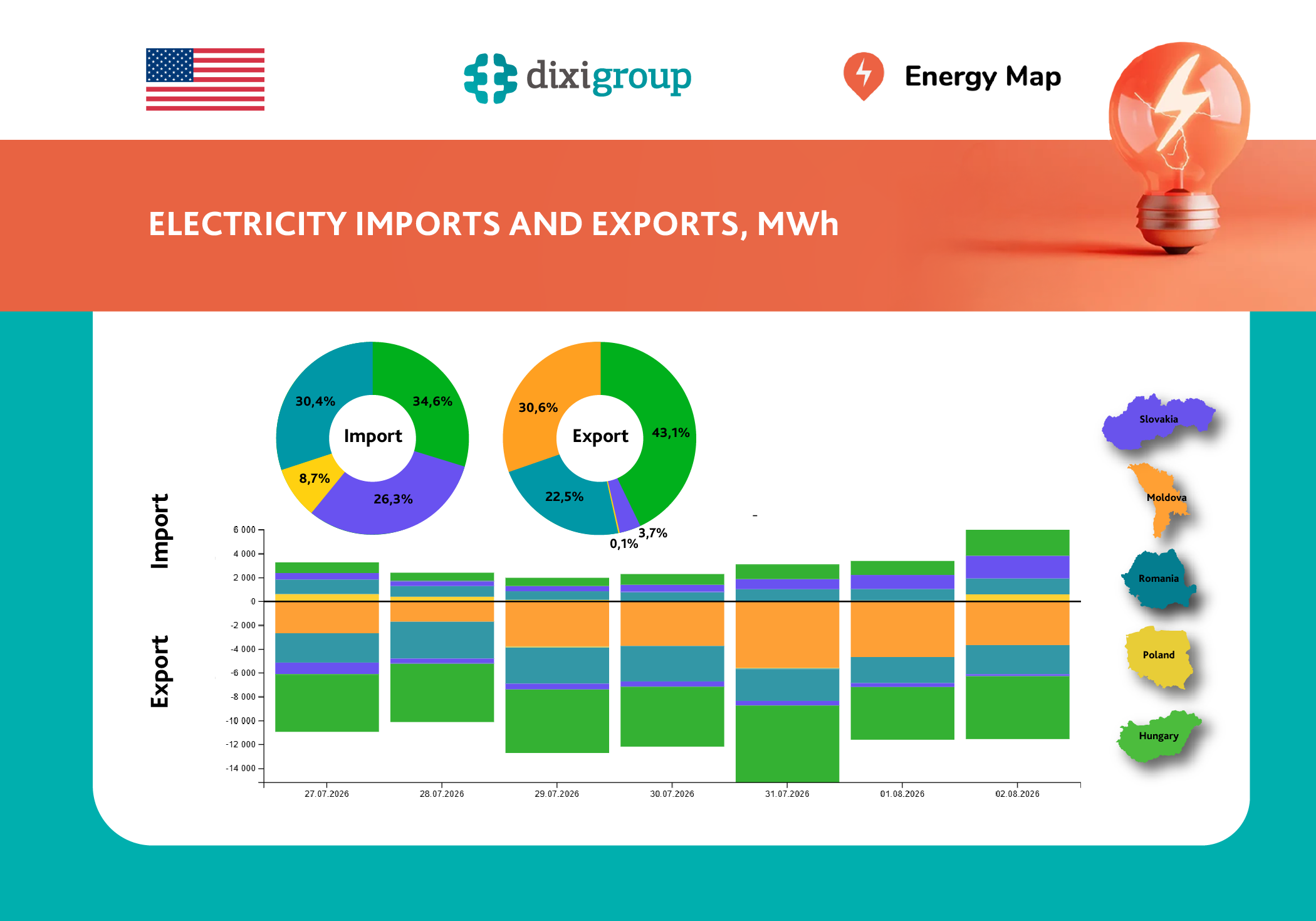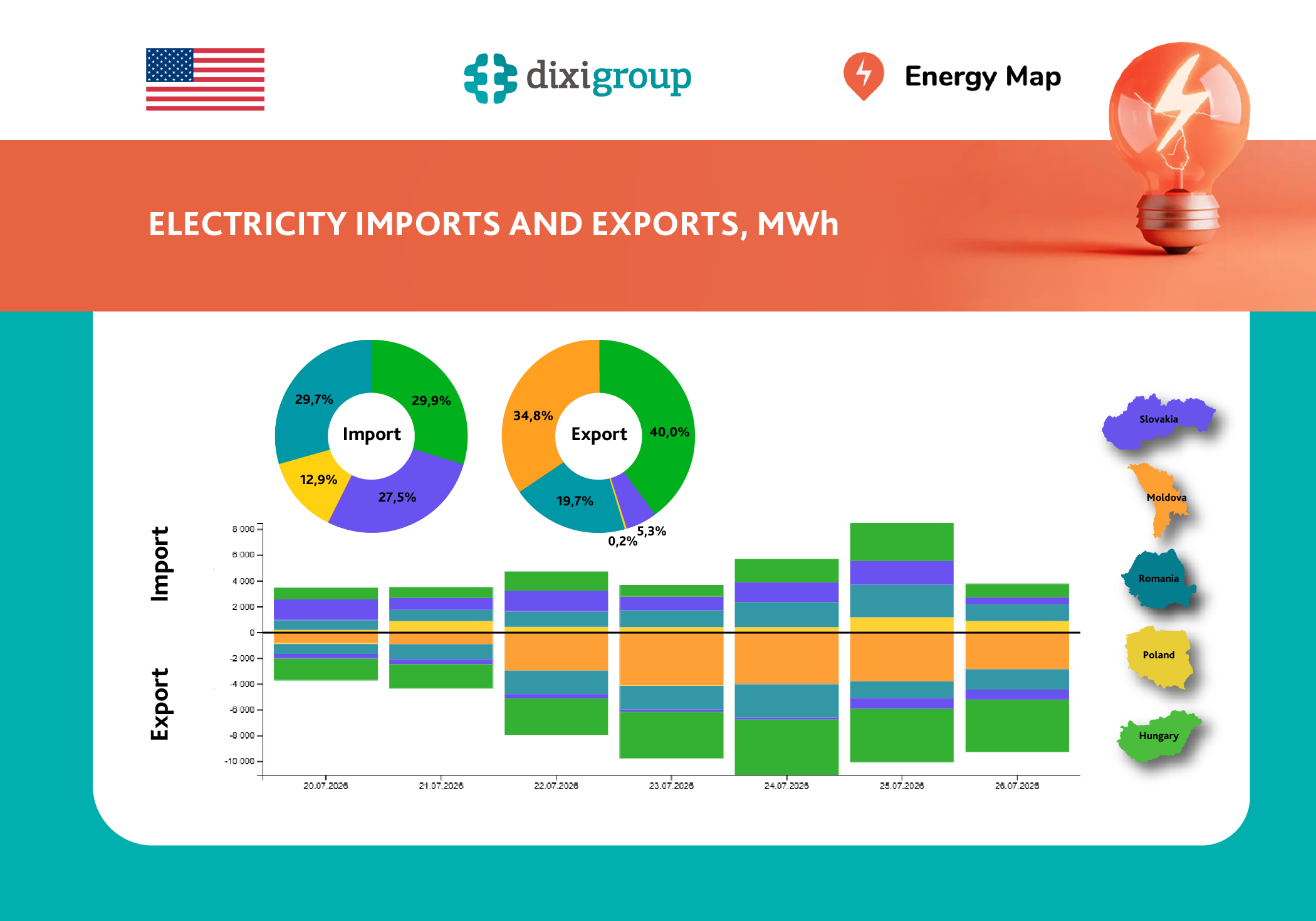
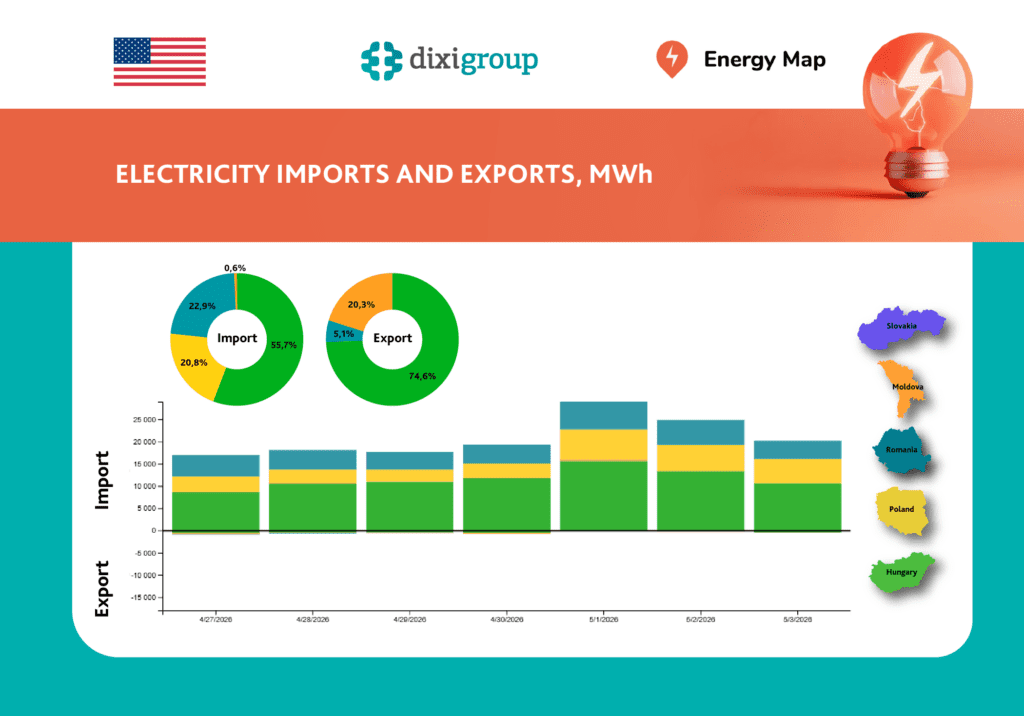
According to Energy Map, between April 27 and May 3, Ukraine reduced electricity imports by 3% to 146.0 GWh. At the same time, an increase in imports was observed at the end of the week: on May 1, volumes rose to 29.0 GWh (+50% compared to the previous day), amid changes in market conditions.
These changes resulted from the NEURC’s decision to revise price caps in the short-term market segments, which came into effect on May 1. The new limits were set at up to UAH 15,000/MWh for the day-ahead market (DAM) and intraday market (IDM), and up to UAH 17,000/MWh for the balancing market. According to the regulator, this is expected to improve market resilience amid generation shortages and increase the economic attractiveness of imports during peak hours.
Weather conditions also had an additional impact on the power system balance during the week. Higher temperatures, longer daylight hours, and strong solar activity contributed to increased solar generation and reduced system load. This made it possible to meet demand without applying consumption restrictions.
Import structure by country:
- Hungary – 81.4 GWh (55,7%);
- Romania – 33.4 GWh (22,9%);
- Poland – 30.3 GWh (20,8%);
- Moldova – 0.9 GWh (0,6%).
During the week, imports from Hungary and Romania increased slightly – by 1% and 5%, respectively, while imports from Moldova and Poland decreased by 11% and 19%.
Electricity exports remained low and sporadic. Over the week, Ukraine exported 3.9 GWh, which is 30% less than in the previous week. Supplies were carried out exclusively during periods of surplus (nighttime and daytime hours).
Export structure by country:
- Hungary – 2.9 GWh (74,6%);
- Moldova – 0.8 GWh (20,3%);
- Romania – 0.2 GWh (5,1%).
There were no deliveries to Slovakia and Poland. Compared to the previous week, exports to Hungary and Moldova decreased by 22% and 53%, respectively, while exports to Romania increased by 8%.
***
The EST project supports key U.S. administration priorities by advancing its energy interests and expanding opportunities for American companies in Ukraine’s energy sector. By strengthening transparency and anti-corruption safeguards, the project helps foster a more predictable, rules-based environment that can support fair competition and encourage investment. Through support for market-oriented reforms and stronger data systems, EST contributes to U.S. economic interests while reinforcing U.S. leadership in the global energy sector.
This report is made possible by the generous support of the United States Government. The contents are the responsibility of DiXi Group and do not necessarily reflect the views of the United States Government.