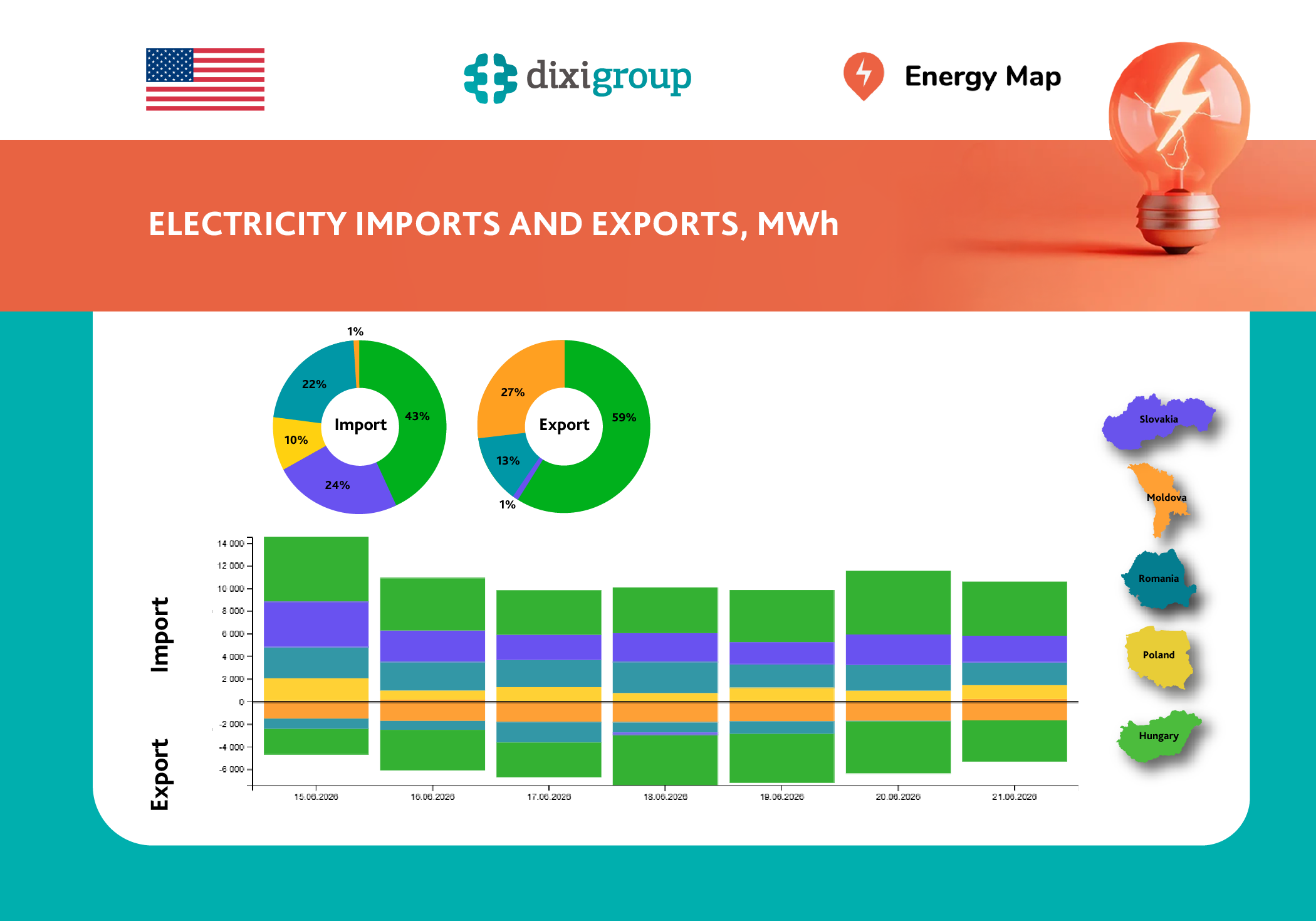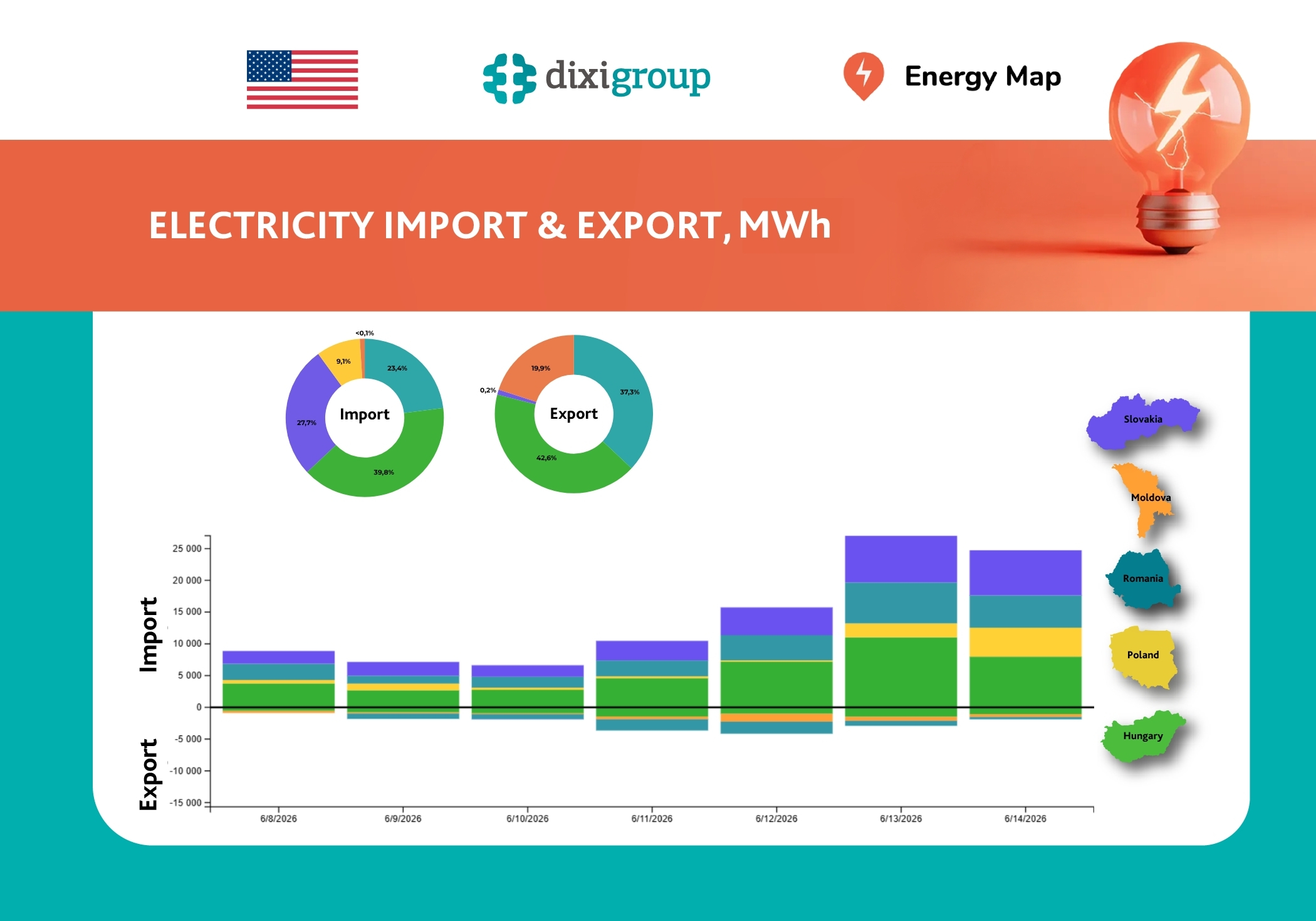
According to Energy Map, during the period of June 22-28, electricity imports to Ukraine decreased by 39% compared to the previous week – to 47.1 GWh. At the same time, exports increased by 14% to 50.1 GWh. Thus, for the first time since October 2025, Ukraine ended the week as a net exporter of electricity, with export volumes exceeding imports by 3 GWh, or 6%.
One of the key factors behind the increase in electricity exports was the growth in domestic power generation. Sunny weather ensured high output from solar power plants, while the recent return of a nuclear power plant (NPP) unit from scheduled maintenance improved the power system’s balance and expanded export capabilities. The highest daily export volume was recorded on June 24, reaching 10.9 GWh.
However, the situation changed during the second half of the week. A heatwave, with air temperatures exceeding 30°C, led to an increase in electricity consumption due to the intensive use of air conditioning. The increase in domestic demand had a direct impact on cross-border electricity trade. While Ukraine was actively exporting electricity at the beginning of the week, exports were completely halted on June 25-26 during peak evening hours (19:00-23:00) when the load on the power grid is high. Meanwhile, imports remained concentrated during the evening demand peak (17:00-20:00), with the highest daily import volume of the week recorded on 25 June at 7.9 GWh.
Despite the increased load, overall demand was covered by domestic generation and commercial imports. Hourly outage schedules for households and capacity limitations for businesses were not applied. However, on June 25, due to a technical failure at one of the energy facilities, emergency shutdowns were temporarily implemented for all categories of consumers in parts of Kyiv. Overall, the power system balance remained fragile, and the risks of deterioration in the event of further temperature increases or emergency events remained high.
Cross-border trade was additionally influenced by the situation in European markets, where electricity prices rose due to the heatwave sweeping across most of Europe.
Import structure by country:
- Hungary – 25.7 GWh (54.7%);
- Slovakia – 10.9 GWh (23.2%);
- Romania – 10.2 GWh (21.6%);
- Poland – 0.2 GWh (0.4%);
- Moldova – 0.1 GWh (0.1%).
Hungary remained the primary export destination, receiving 30.8 GWh, or 61.5% of Ukraine’s total electricity exports. Exports to Moldova amounted to 14.5 GWh (28.9%), followed by Romania with 4.3 GWh (8.5%) and Slovakia with 0.5 GWh (1.1%).
The EST project supports key U.S. administration priorities by advancing its energy interests and expanding opportunities for American companies in Ukraine’s energy sector. By strengthening transparency and anti-corruption safeguards, the project helps foster a more predictable, rules-based environment that can support fair competition and encourage investment. Through support for market-oriented reforms and stronger data systems, EST contributes to U.S. economic interests while reinforcing U.S. leadership in the global energy sector.
This report is made possible by the generous support of the United States Government. The contents are the responsibility of DiXi Group and do not necessarily reflect the views of the United States Government.