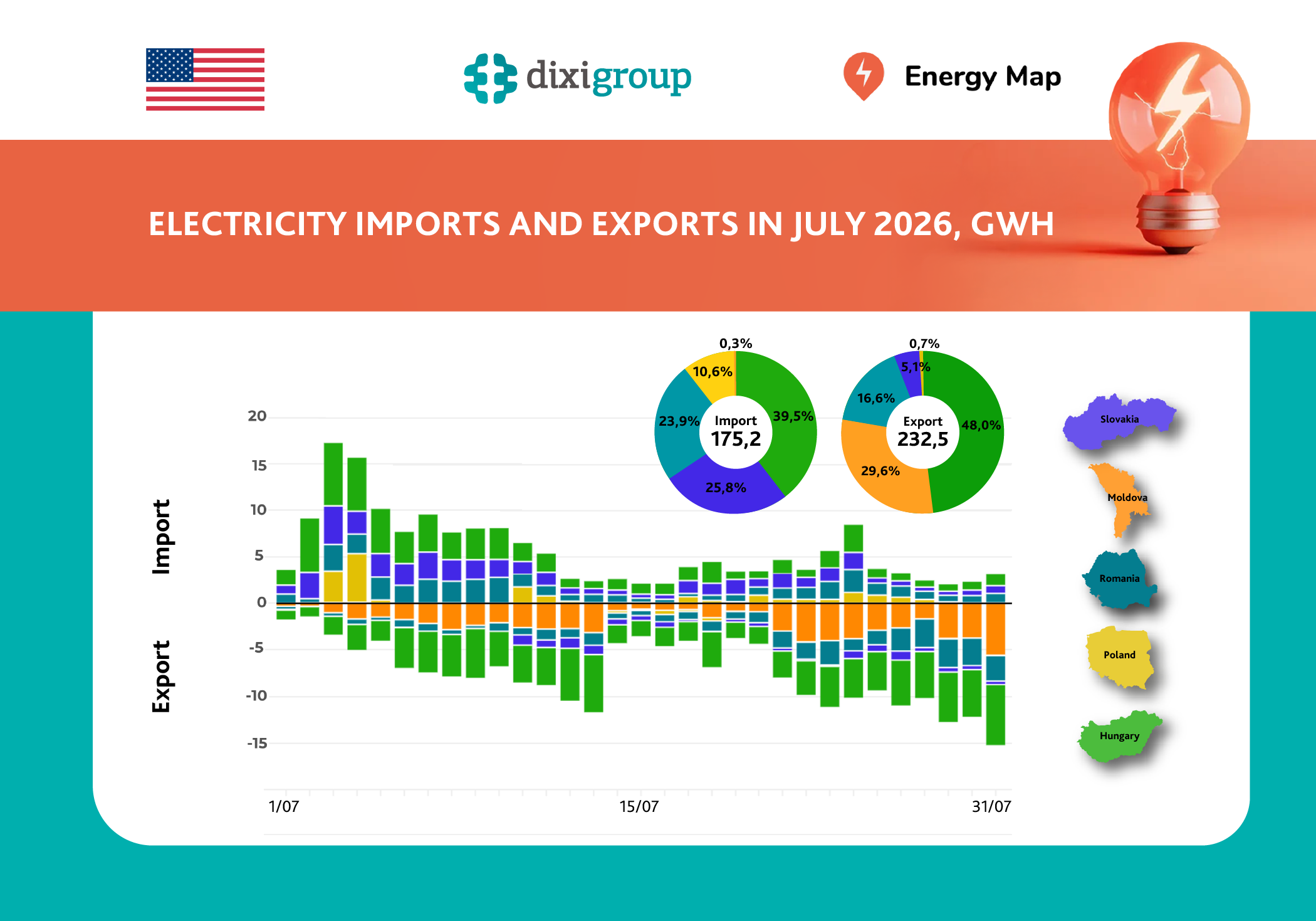
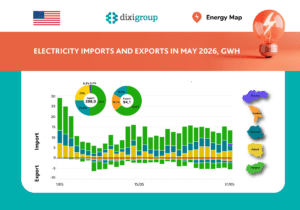
According to Energy Map, in May 2026 Ukraine reduced electricity imports by 29% compared to April, to 398.0 GWh. This is the third month in a row when the volume of import supplies has decreased. At the same time, electricity exports increased by 2.8 times, reaching 94.1 GWh. Despite this growth, Ukraine remained a net importer of electricity: imports exceeded exports by 4.2 times.
The main factor behind the reduced need for electricity imports was favorable weather conditions. Warmer temperatures led to lower electricity consumption, while longer daylight hours and high solar irradiation boosted electricity generation from solar power plants. As a result, the load on the power system decreased, and the combination of domestic generation and imports allowed to fully cover demand without applying consumption limitation measures throughout the month. May became the first month of 2026 during which no electricity supply limitations were imposed on households, businesses, or industrial consumers.
At the same time, the security situation remained tense. During May, russia carried out two waves of massive attacks on Ukraine’s energy infrastructure – on 1 May and 13-14 May – which caused damage to energy facilities and disruptions in electricity supply in several regions.
To increase market stability and improve the economic attractiveness of imports during peak load hours, new price caps on short-term market segments came into effect on 1 May. Maximum price caps were raised to UAH 15,000/MWh for the day-ahead market and intraday market, and up to UAH 17,000/MWh for the balancing market. On the first day of the new price limits, daily imports increased by 50% compared to the previous day, reaching 29.0 GWh. However, the decision did not affect the overall downward trend in imports over the month.
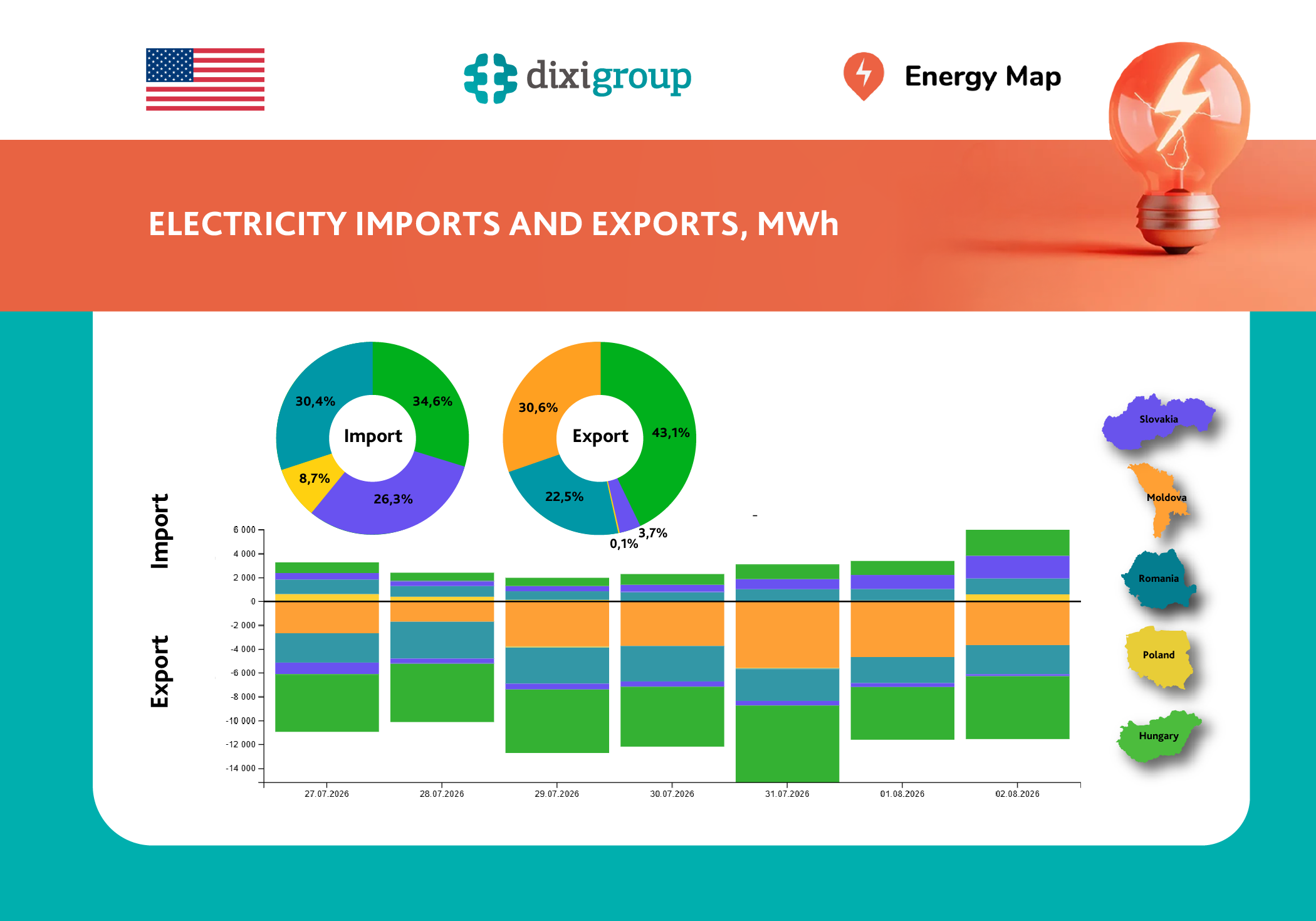
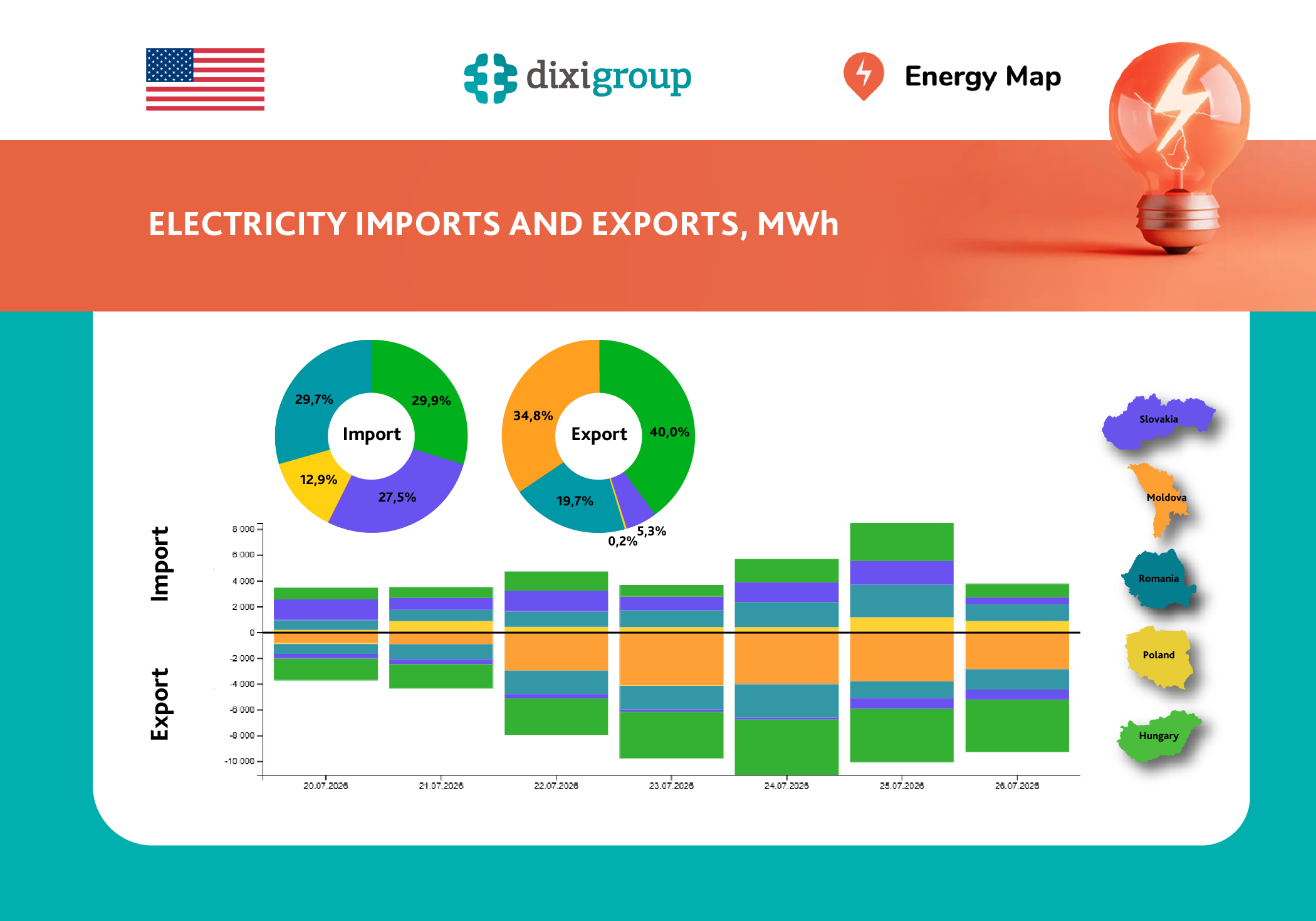
Import structure by country:
- Hungary – 206.6 GWh (52.0%);
- Romania – 97.7 GWh (24.5%);
- Poland – 91.4 GWh (23.0%);
- Moldova – 1.4 GWh (0.3%);
- Slovakia – 0.9 GWh (0.2%).
Compared to April, electricity imports decreased across most directions by 21-59%. The only exception was Slovakia, where supplies increased sevenfold, although they were actually carried out only during one day – on 31 May.
Despite the month-on-month decline, imports remained significantly higher than the previous year’s level. For comparison, in May 2025 Ukraine imported 194.1 GWh of electricity, which is twice as low as in May 2026.
Electricity exports were carried out in only three directions:
- Hungary – 59.9 GWh (63.6%);
- Moldova – 18.0 GWh (19.1%);
- Romania – 16.2 GWh (17.3%).
Supplies to Poland and Slovakia were absent.
Compared to April, exports increased by 2-5 times across all supply directions. However, on a year-on-year basis, the growth was insignificant: in May 2025, exports amounted to 92.7 GWh, which is only 2% lower than the reporting month’s figure.
Use of interconnector capacity for imports
Since the beginning of the year, the nominal import capacity limit from EU countries to Ukraine and Moldova has been set at 2.45 GW. As part of this capacity is allocated to supplies to Moldova, the actual available volume of commercial imports for Ukraine is about 2.1 GW. At the same time, the available import capacity is not fixed and may be adjusted depending on the current conditions in the power systems of the countries participating in the Eastern European Capacity Calculation Region (EE CCR).
In May, the average utilization of the available transmission capacity was only 25.5% of the accepted nominal level (2.1 GW). The maximum utilization of interconnectors – 80.8% – was recorded on 1 May between 6 and 8 p.m., while the minimum level stood at 5.4% on 31 May between 5 and 6 a.m.
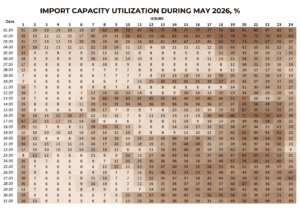
Thus, despite ongoing attacks on energy infrastructure and the increase in price caps to stimulate imports, seasonal declines in consumption and the growth of solar generation allowed Ukraine to reduce its need for imported electricity. Overall, electricity imports remained an important tool for meeting consumer demand and balancing the power system, however, their volumes were the lowest recorded since the beginning of spring.
The EST project supports key U.S. administration priorities by advancing its energy interests and expanding opportunities for American companies in Ukraine’s energy sector. By strengthening transparency and anti-corruption safeguards, the project helps foster a more predictable, rules-based environment that can support fair competition and encourage investment. Through support for market-oriented reforms and stronger data systems, EST contributes to U.S. economic interests while reinforcing U.S. leadership in the global energy sector.
This report is made possible by the generous support of the United States Government. The contents are the responsibility of DiXi Group and do not necessarily reflect the views of the United States Government.