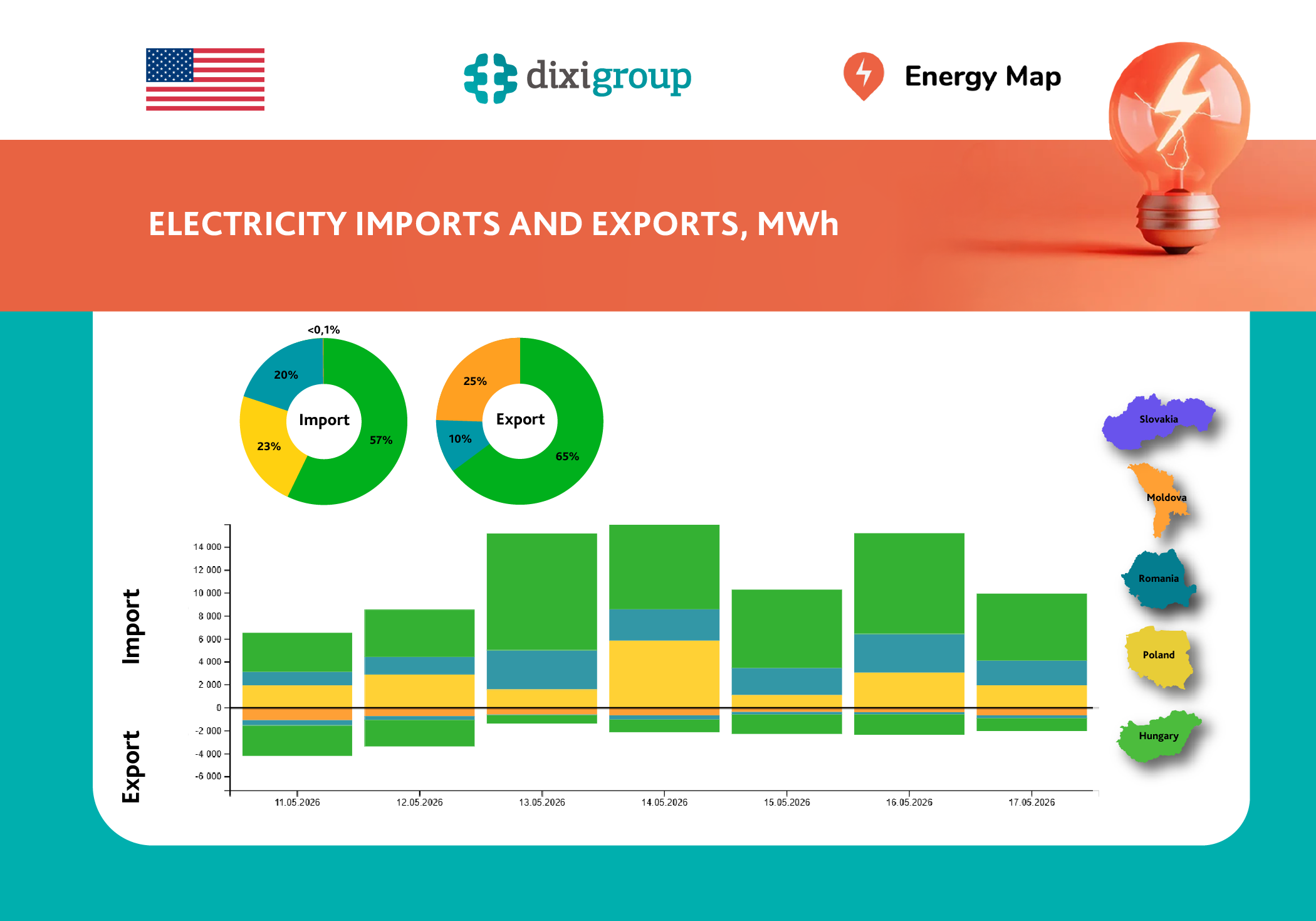
According to Energy Map data, electricity imports to Ukraine in January 2026 increased by 40% compared to December, reaching 894.5 GWh. This is the highest monthly figure since the launch of the new electricity market in July 2019 (historical daily data prior to that period are not publicly available). No electricity exports were carried out.
For comparison, in January 2025 electricity imports amounted to 183.1 GWh, while exports totaled 84.7 GWh.
Throughout the month, Ukraine’s power system operated under increased load, and from January 16 an energy emergency regime was introduced nationwide. According to President Volodymyr Zelenskyy, during January russia used more than 6,000 attack drones, around 5,500 guided aerial bombs, and 158 missiles of various types against Ukraine’s energy system and critical infrastructure. Overall, six large-scale attacks were carried out during the month, damaging generation facilities as well as electricity transmission and distribution networks. These attacks coincided with a significant deterioration in weather conditions and a drop in air temperatures, which further increased pressure on the power system.
One of the factors contributing to the growth of electricity imports was an increase in upper price caps on short-term market segments. Starting from the delivery day of January 18, price caps were raised to UAH 15,000/MWh on the day-ahead market and the intraday market (IDM), and to UAH 16,000/MWh on the balancing market.

Structure of electricity imports by country of origin:
- Hungary – 402.0 GWh (45%);
- Romania – 185.9 GWh (21%);
- Slovakia – 159.8 GWh (18%);
- Poland – 135.2 GWh (15%);
- Moldova – 11.6 GWh (1%).
The increase in import volumes from European countries ranged from 18% to 62%, with the exception of Moldova, where supplies decreased by 18%.
Use of interconnector capacity for imports
In January 2026, the maximum cross-border capacity for electricity imports from the European Union to the Ukraine-Moldova control block increased to 2.45 GW. This is an all-time record since Ukraine’s synchronization with the ENTSO-E network. At the same time, part of this capacity is used for electricity imports to Moldova, leaving approximately 2.1 GW of commercial import capacity available for Ukraine. The permitted import capacity for each country within the control block is dynamic and may change depending on the operational situation in the power systems.
On average during January, utilization of the available transmission capacity amounted to 57.3% of the nominal value (2.1 GW). The maximum utilization level was recorded on January 24 between 16:00 and 17:00, reaching 104%, while the minimum was observed on January 9 during the same time interval, at 19.9%.

Thus, Ukraine ended January 2026 as a net importer of electricity. This marked the fourth consecutive month of net import status and highlights the critical role of imports in maintaining power system stability amid large-scale attacks and high seasonal electricity demand.
The material is made possible by the support of the American people as part of the Energy Sector Transparency Project implemented by DIXI GROUP. The information contained in this material is the sole responsibility of DIXI GROUP and can under no circumstances be taken to reflect the position of the U.S. Government.