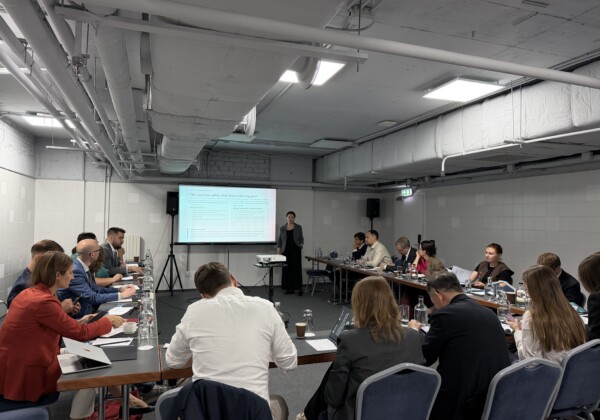
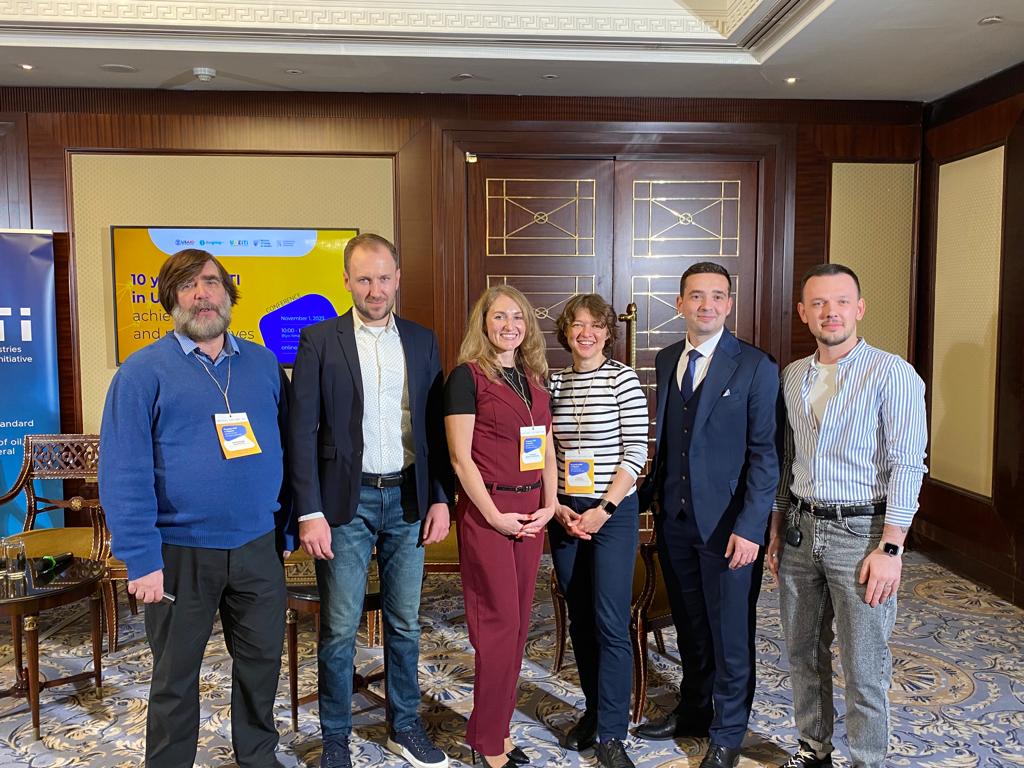
On November 1, the conference “10 Years of the Extractive Industries Transparency Initiative in Ukraine: Achievements and Prospects” took place. The event was organized by the International Renaissance Foundation and the Ministry of Energy of Ukraine in cooperation with the DiXi Group think tank, with the support of the United States Agency for International Development (USAID). The conference brought together representatives of civil society, the Government, international partners, and the expert community.
Ukraine joined the Initiative back in 2013 and has since fully integrated the Standard into its national legislation.
Opening the conference, Olena Pavlenko, President of DiXi Group, thanked the Ministry of Energy of Ukraine for its ten years of leadership in implementing the EITI in Ukraine.
“The Initiative continues to move forward despite the full-scale war, revolutions, and political changes. This year, the global Initiative recognized Ukraine as one of the best-performing countries in implementing the Standard. Today is a time to celebrate, and at the same time to reflect on how to move forward with the implementation of the new Standard adopted in June 2023 in Dakar,” she noted.
Deputy Minister of Energy of Ukraine Svitlana Hrynchuk emphasized that since as early as 2008, Ukraine had been working toward obtaining the status of a country implementing the international Standard:
“The most difficult element was to find common ground among all parties involved in this process – companies, government, and civil society – on how to move forward and set shared goals. We managed to unite our efforts and make the EITI implementation process in Ukraine one that is recognized as one of the best examples, even during wartime.”
She also highlighted the creation of the EITI Portal in Ukraine as one of the key achievements of Standard implementation, noting that this platform helped collect information during the full-scale war and fulfill Ukraine’s international obligations. At the same time, she noted that the greatest challenge for the Initiative in Ukraine today is access to information due to its sensitivity.
Helen Clark, Chair of the EITI Board, noted that Ukraine has achieved a great deal over the past decade. For example, in 2015 Ukraine became one of the first EITI countries to establish a beneficial ownership register, which has also contributed to transparency and anti-corruption efforts.
“You have taken on the mission of improving governance transparency for the benefit of all citizens. Despite difficult conditions, you remain active in supporting this Initiative and are willing to share your implementation experience with others. The Multi-stakeholder group continues to operate and publish reports, and to seek new, innovative ways of data disclosure. These are best practices in the region and therefore extremely valuable to the entire community. We recognize these achievements, which is why in June this year in Senegal it was acknowledged that Ukraine deserves a corresponding award. Your work on transparency and good governance during wartime is an inspiration to all of us,” Helen Clark stated.
During the first panel, “EITI Implementation in Ukraine: Discoveries, Challenges, and Achievements,” Oleksii Orlovskyi, Director of the Democracy and Good Governance Program at the International Renaissance Foundation and former long-standing member of the EITI global Board, recalled that Ukraine received EITI Candidate status shortly before the Revolution of Dignity. Therefore, it is not surprising that an anti-corruption motive was embedded in EITI implementation in Ukraine from the very beginning.
“If you look at the rhetoric currently used by the global EITI Board, the Initiative is only now being positioned as an anti-corruption instrument. In Ukraine, however, we emphasized this even before joining the EITI and starting its implementation. This is closely aligned with societal demand and speaks volumes about the significant influence of civil society,” Oleksii Orlovskyi explained.
Dina Narezhneva, Program Manager for Democracy and Good Governance at the International Renaissance Foundation and Head of the EITI National Secretariat in Ukraine in 2015–2018, noted that civil society has been and remains the key driver of EITI implementation in Ukraine.
“It was civil society that demonstrated activity, interest, and readiness not to give up even when things were difficult,” she explained. Among other important elements, she mentioned the presence of an appropriate regulatory framework and the digitalization of EITI implementation.
During the second panel, “The Future of Standard Implementation at the National Level,” Deputy Minister of Energy of Ukraine for Digital Development, Digital Transformations, and Digitalization Farid Safarov emphasized that the main goal of further digitalization of the Initiative in Ukraine is to properly collect, analyze, and share data both with civil society and with colleagues in other government bodies.
“The EITI is an example of an initiative from which a wide range of stakeholders benefit. This case has shown that structure and interaction between businesses and the state are exactly what entrepreneurs themselves expect. The reporting submitted by companies through the platform is an example of how a properly implemented initiative leads to the right form of interaction between the public and private sectors,” he noted.
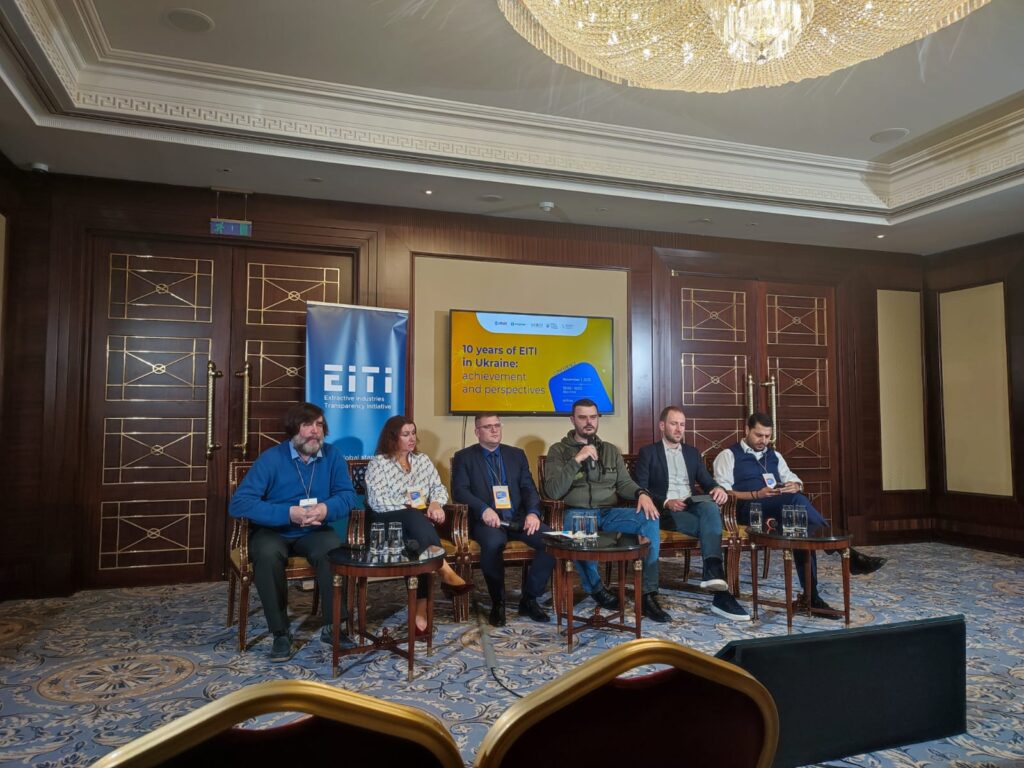
Artem Petrenko, Executive Director of the Association of Gas Producers of Ukraine, emphasized that openness is key to debunking the myths that have often surrounded Ukraine’s gas production sector:
“We see that despite all the challenges, companies have not stopped reporting and continue to do so within the framework and deadlines established by law. I thank everyone for their effective work and hope that after victory we will be able to open part of the data again to demonstrate transparency once more.”
During the conference in Kyiv, the Updated Extractive Industries Transparency Initiative Standard 2023 was presented. Ukrainian became the fifth language into which the updated Standard has been translated.
Within the discussion “The EITI Standard: Regional Level,” Olha Khauliak, Head of the Energy Transparency Association, highlighted the environmental transparency provisions included in the updated document.
“Today, both in Ukraine and in the Middle East, there are wars that are often linked to resources. We understand that the war in Ukraine is also closely connected to the resources of this region. Therefore, issues of energy transition, the use of low-carbon energy sources, and carbon dioxide emissions in the extractive process are becoming increasingly important. The new Standard includes a much broader range of environmental aspects recommended for disclosure,” she noted.
At the same time, she emphasized that thanks to constructive cooperation between civil society, the Government, and companies, Ukraine had already begun to disclose environmental information in its reports even before these requirements were strengthened in the Standard. This includes environmental payments and information on the environmental impacts of extractive activities.
It should be recalled that this year Ukraine became one of three countries to receive the prestigious EITI Chair’s Award 2023 for continuing the implementation of the EITI Standard despite numerous challenges and restrictions arising after Russia’s full-scale invasion of Ukraine: https://bit.ly/48xDciI.