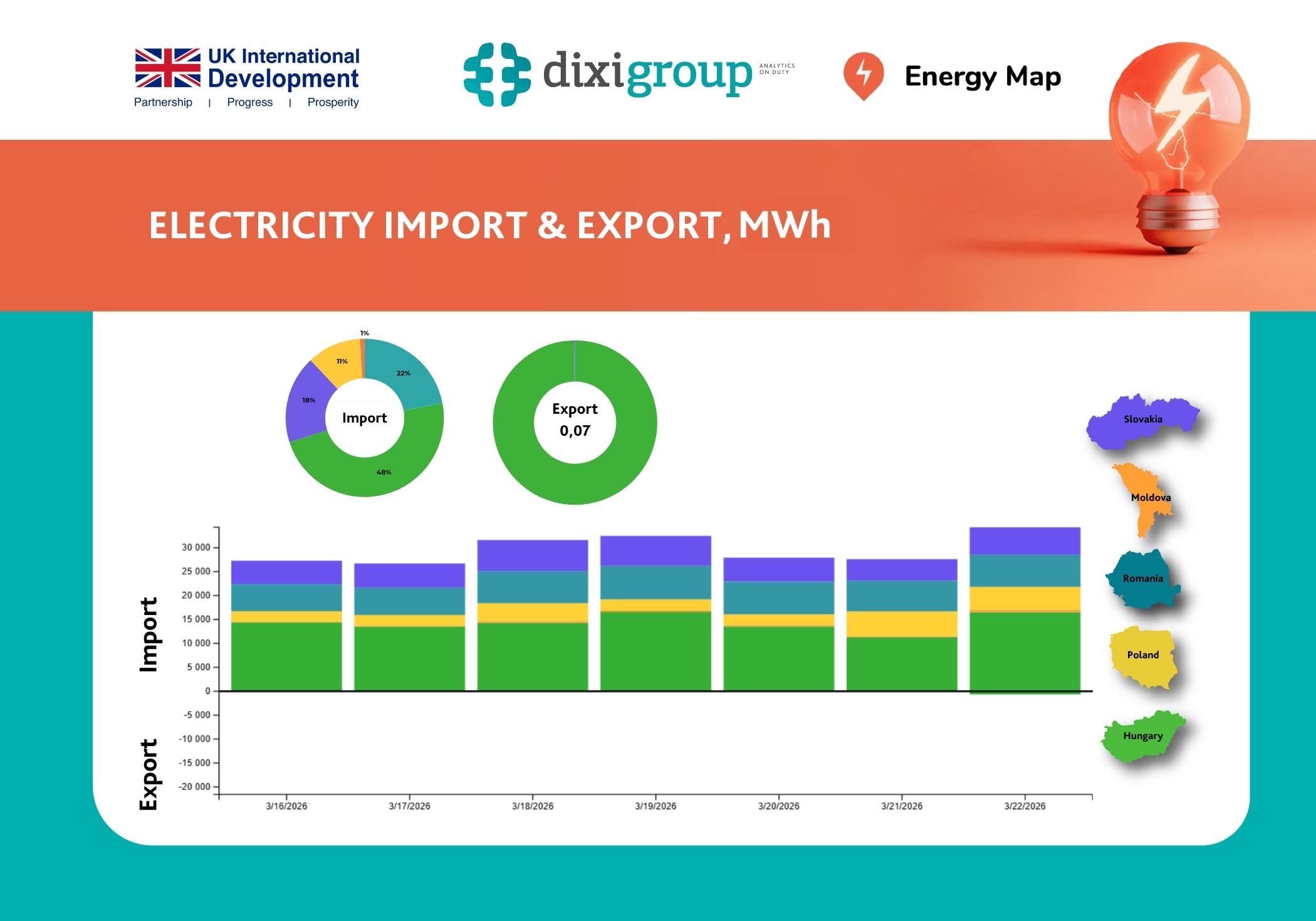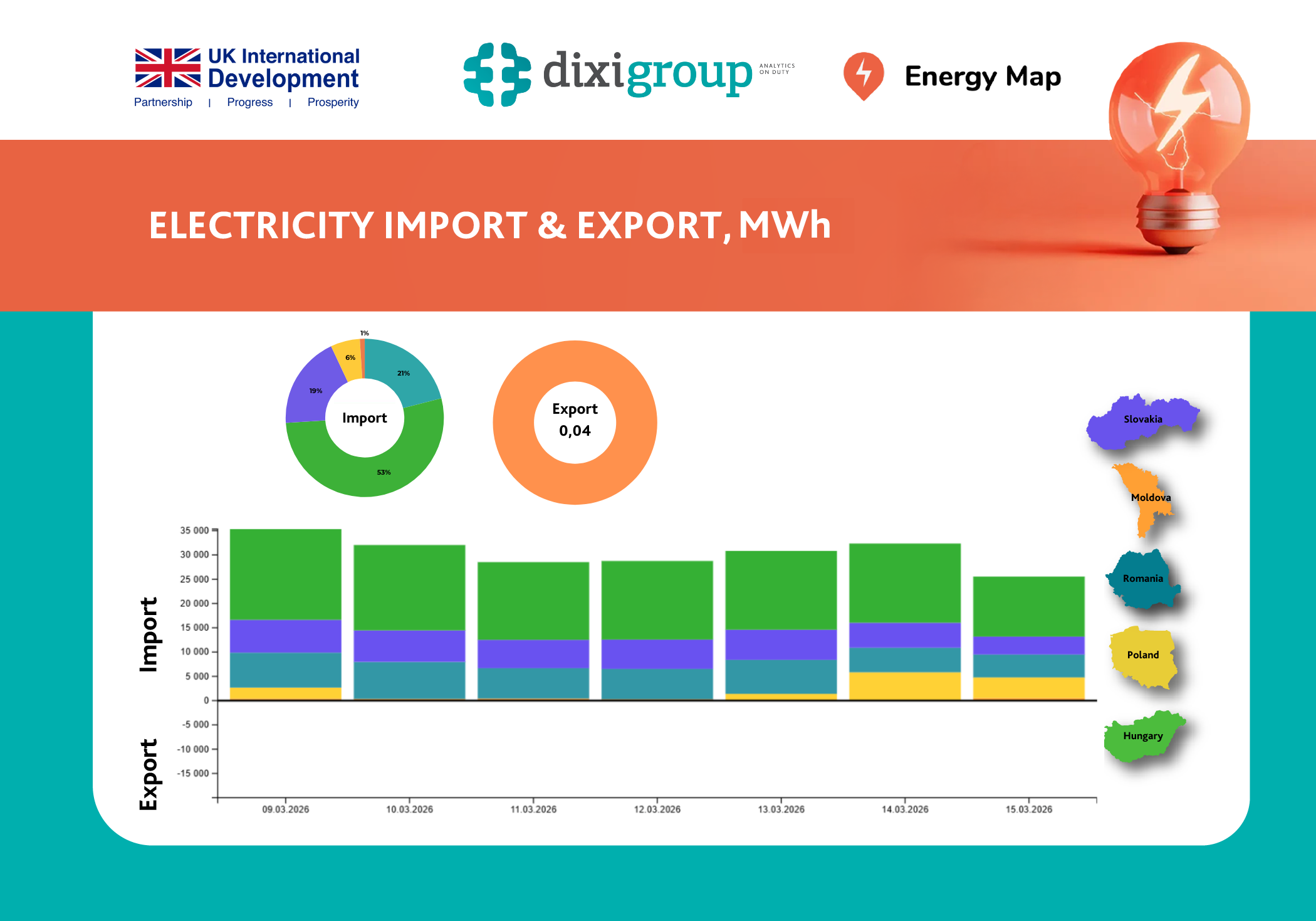
According to Energy Map, during the week of March 23-29 electricity imports to Ukraine increased by 4% to 216.7 GWh. After almost zero volumes in previous weeks, exports also increased significantly to 23.2 GWh.
During the working week, electricity consumption generally decreased due to warming and clear weather, although demand temporarily increased on Tuesday and Wednesday due to cloudiness. Consumption restrictions were applied only at the beginning of the week:
* March 23 – planned stabilization electricity outages in all regions from 17:00 to 22:00, power limitation schedules for business and industry during the same hours;
* March 24 – planned stabilization electricity outages in most regions from 06:00 to 10:00 and 16:00 to 22:00, power limitation schedules for business from 06:00 to 24:00.
The decrease in overall consumption and the increase in generation from renewable sources (mainly solar and hydropower) formed a surplus in certain hours, which allowed for the export of electricity. It is worth noting that on days when consumption restrictions were in effect, exports were zero or minimal (March 23 – not implemented, March 24 – 1 GWh).
More than half of the exported volumes were directed to Moldova – 12.0 GWh (51%). Hungary received 10.3 GWh (45%), and Romania – 0.9 GWh (4%). No deliveries were made to Slovakia or Poland.
However, the energy system remains at risk. On March 24, russia carried out another massive missile and drone attack, which damaged energy infrastructure facilities.
Imports continued to be an important tool for balancing the power system. Supplies from Moldova (+34%) and Poland (+45%) increased the most, while imports from Hungary grew slightly (+0.1%), and from other directions they decreased slightly (by 2-3%).
Import structure by country:
- Hungary – 100.3 GWh (47%);
- Romania – 43.5 GWh (20%);
- Slovakia – 37.2 GWh (17%);
- Poland – 32.9 GWh (15%);
- Moldova – 2.8 GWh (1%).
The publication was prepared with the financial support of the UK Agency for International Development under the project “Mainstreaming National Energy and Climate Plan for Ukraine’s Green Recovery and Strengthening the Green Transition Office” implemented by DIXI GROUP NGO. The contents of the publication are the sole responsibility of DIXI GROUP NGO and under no circumstances can be considered to reflect the position of the UK Agency for International Development.