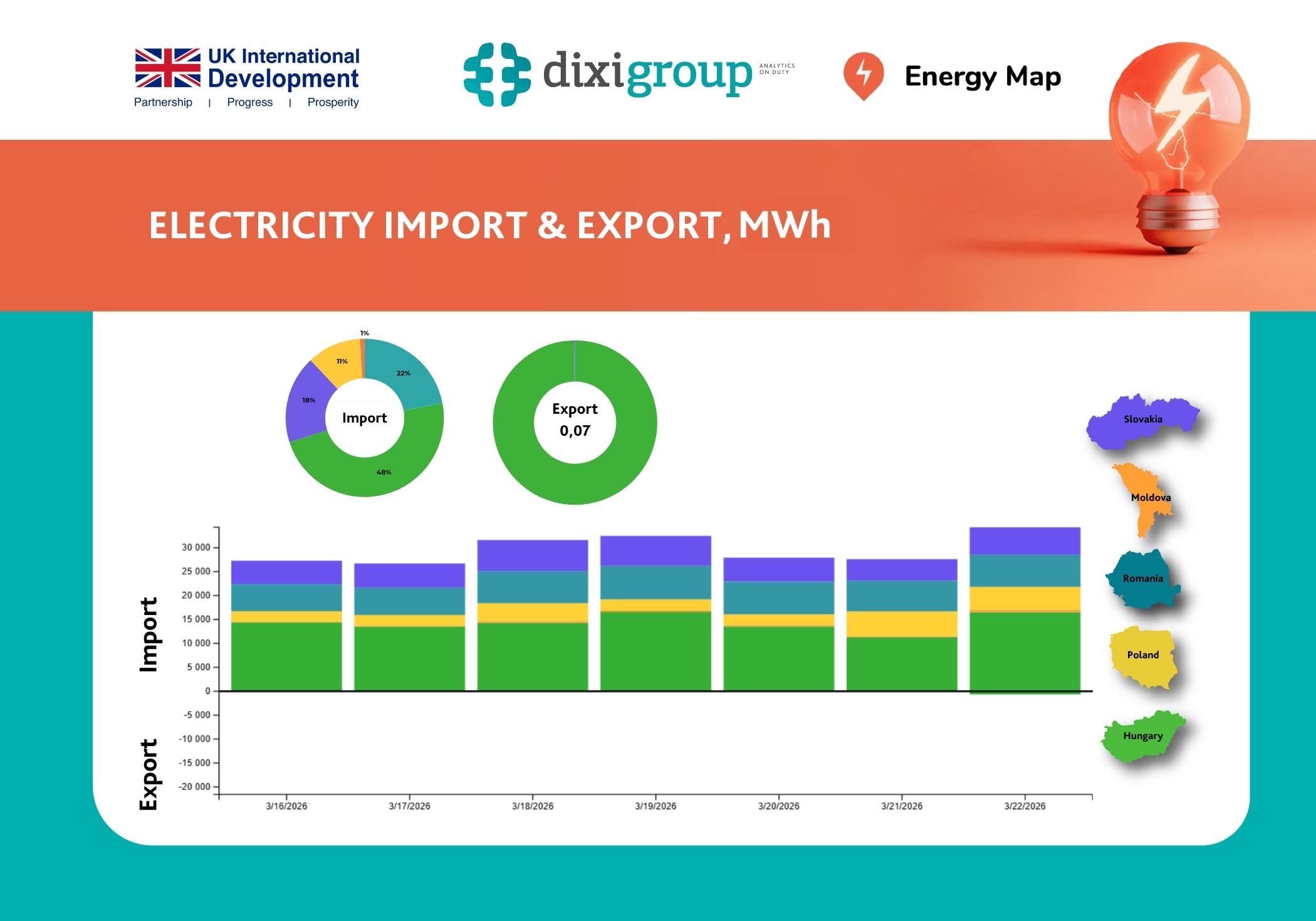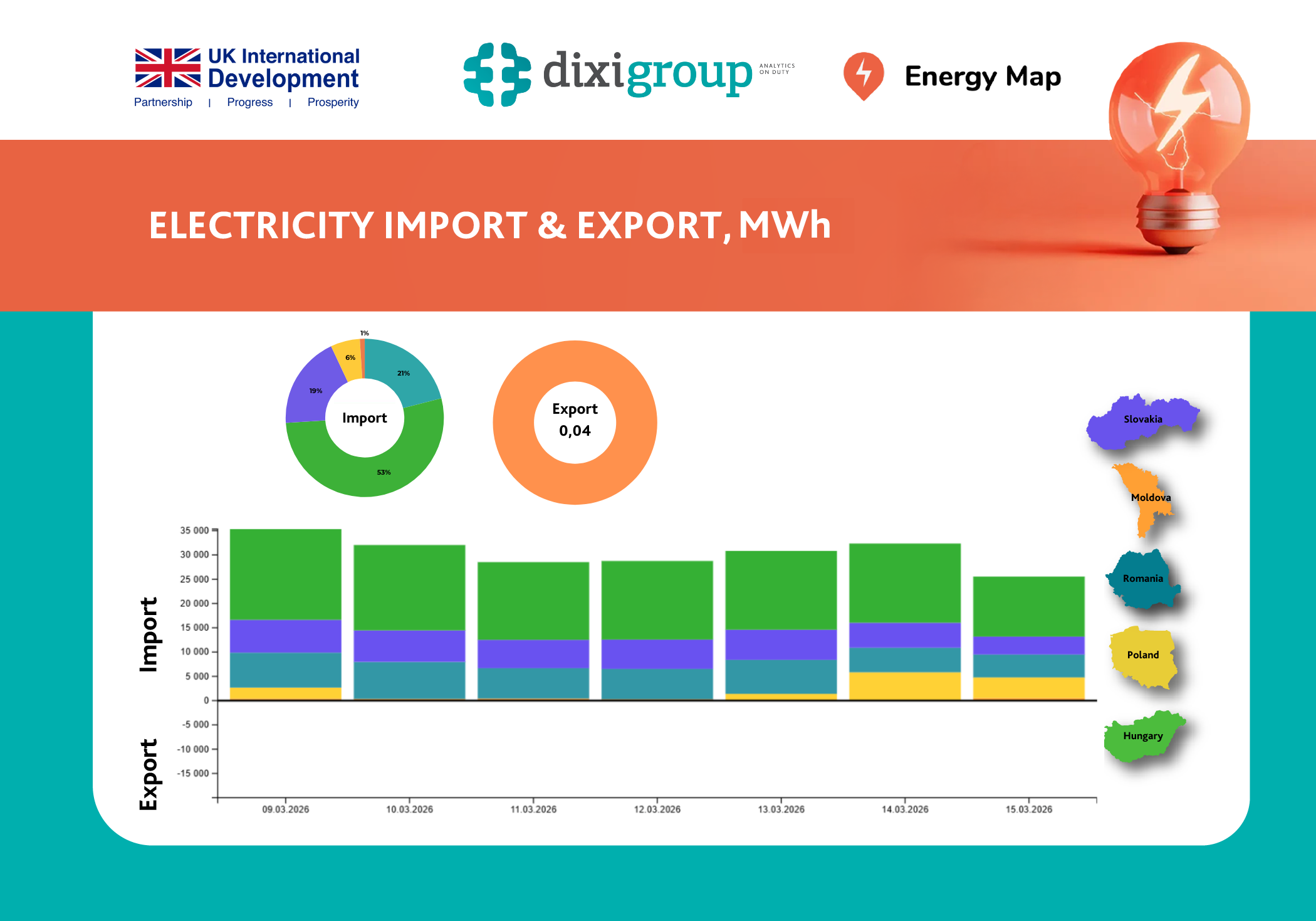
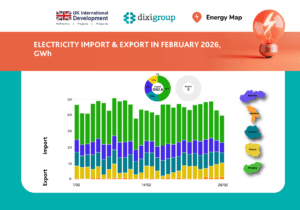
According to Energy Map data, electricity imports to Ukraine in February 2026 increased by 41% compared to January, reaching 1262.8 GWh. This marked a new monthly import record since the launch of the new electricity market*. Electricity exports have been absent for three consecutive months.
For comparison, in February 2025, imports amounted to 244.2 GWh – five times less than in the reporting month.
Throughout February, Ukraine’s power system remained under significant pressure. Frosty weather sustained high electricity demand, while russian attacks caused substantial damage to generation facilities, high-voltage substations, as well as transmission and distribution networks. This created a situation of chronic capacity deficit in the power system, which at certain periods reached 5-6 GW.
During the month, six large-scale attacks were recorded (more than 60 since the start of the full-scale war). Following the attacks on February 7 and 26, Ukrainian nuclear power plants were forced to partially reduce output, complicating system balancing and increasing the need for imports. In particular, on February 8 – the day after one of the mass attacks – a record* daily import volume of 50.6 GWh was recorded.
Structure of electricity imports by country of origin:
- Hungary – 618.0 GWh (49%);
- Romania – 240.6 GWh (19%);
- Slovakia – 227.1 GWh (18%);
- Poland – 159.4 GWh (13%);
- Moldova – 17.7 GWh (1%).
Electricity procurement volumes increased across all supply routes – by 18-54% depending on the country. One of the key drivers behind the record growth in imports was the Regulator’s revision of price caps on the spot market segments: the day-ahead market and the intraday market. The price caps reached a record level of UAH 15,000/MWh (approximately EUR 300) and significantly exceeded actual electricity prices in the markets of neighboring Eastern European countries, creating attractive commercial conditions for electricity imports.
Use of interconnector capacity for imports
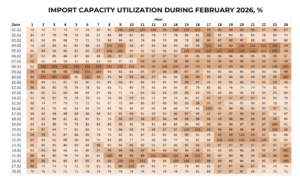
Since January, the import capacity limit from European Union countries to Ukraine and Moldova has been set at 2.45 GW – the highest level since Ukraine’s synchronization with the continental European network ENTSO-E (the previous maximum for the Ukraine-Moldova block was 2.15 GW). Considering that part of the import capacity is allocated to Moldova, approximately 2.1 GW of commercial import capacity is available to Ukraine.
On average throughout February, the utilization of available transfer capacity amounted to 89.5% of the approved nominal value (2.1 GW). The maximum load was recorded on February 8 between 01:00 and 07:00, when hourly values reached 103.7%. The lowest utilization level was recorded on February 7 between 04:00 and 05:00 at 57.3%.
Thus, in February 2026, Ukraine remained a net importer of electricity for the fifth consecutive month, while import volumes reached a historic high amid the escalation of russian attacks and seasonal growth in consumption.
*since the launch of the new electricity market in July 2019; historical daily data prior to this period are not publicly available.
The publication was prepared with the financial support of the UK Agency for International Development under the project “Mainstreaming National Energy and Climate Plan for Ukraine’s Green Recovery and Strengthening the Green Transition Office” implemented by DIXI GROUP NGO. The contents of the publication are the sole responsibility of DIXI GROUP NGO and under no circumstances can be considered to reflect the position of the UK Agency for International Development.