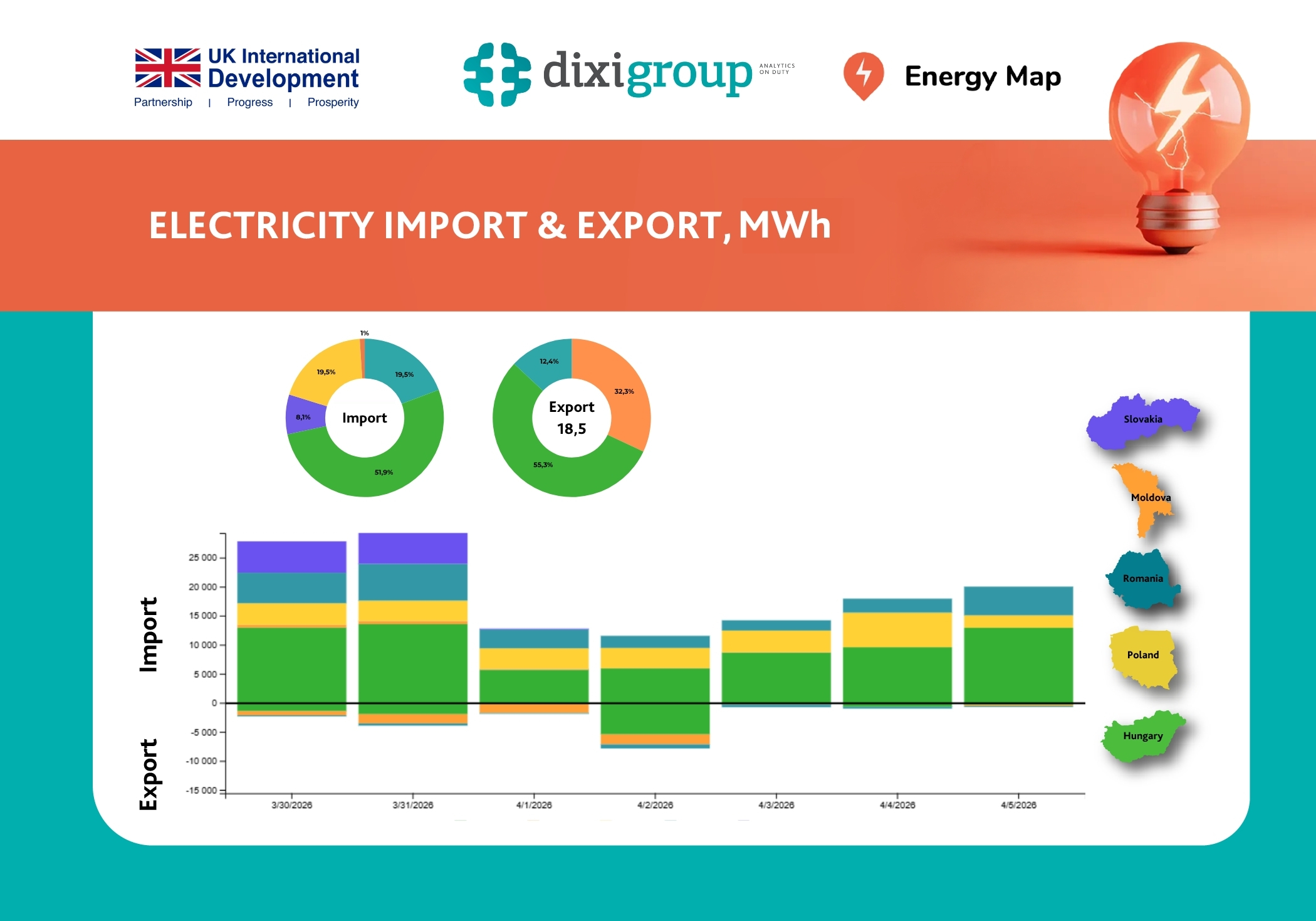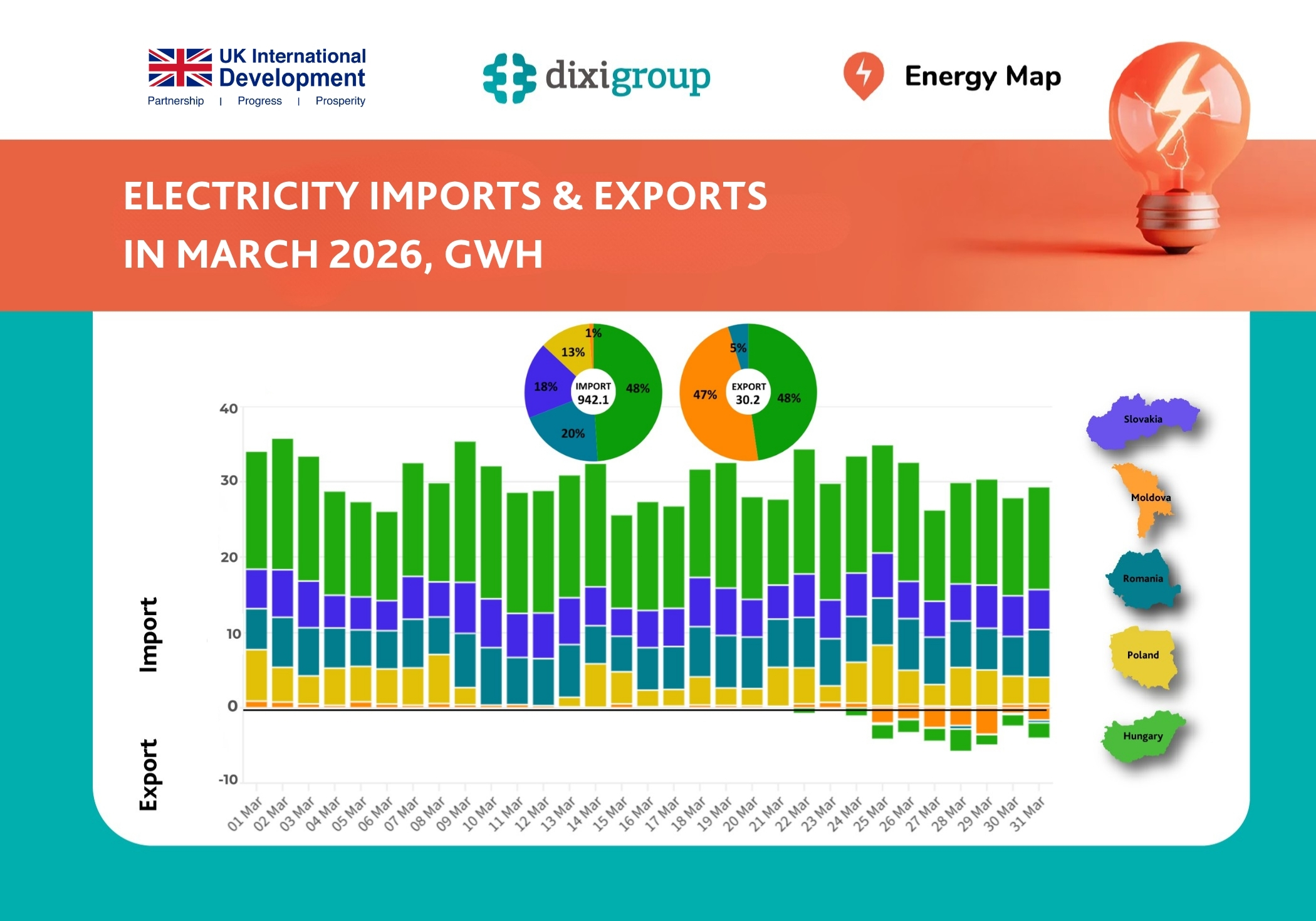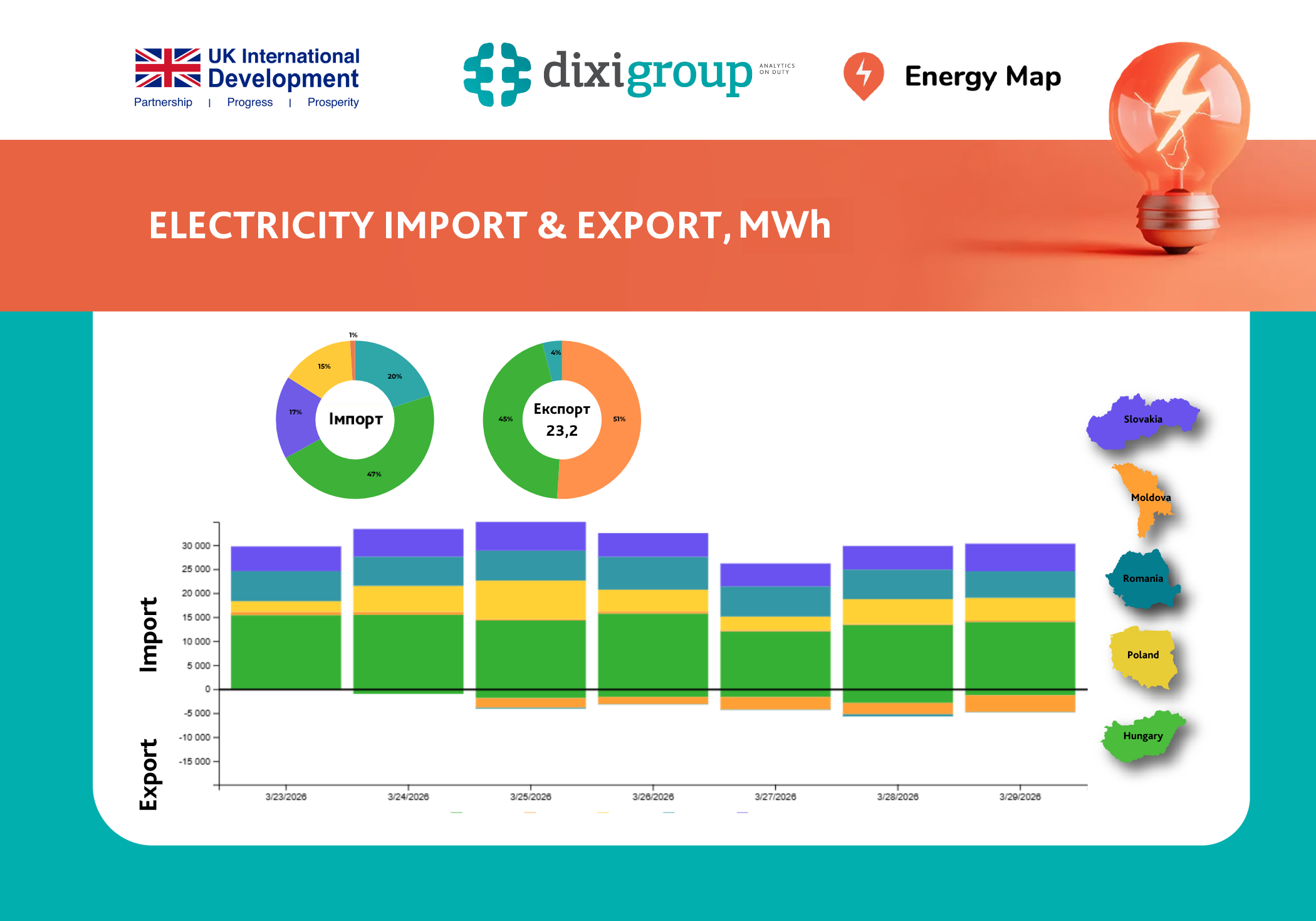
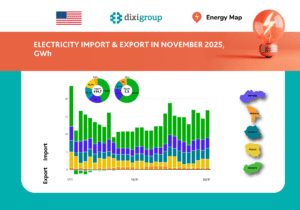
According to Energy Map, in November 2025 Ukraine reduced electricity exports by 94.2%, down to 5.3 GWh – the lowest monthly level since September 2024. Meanwhile, imports increased by 17.2%, reaching 414.7 GWh and thus hitting the highest value since the beginning of the year.
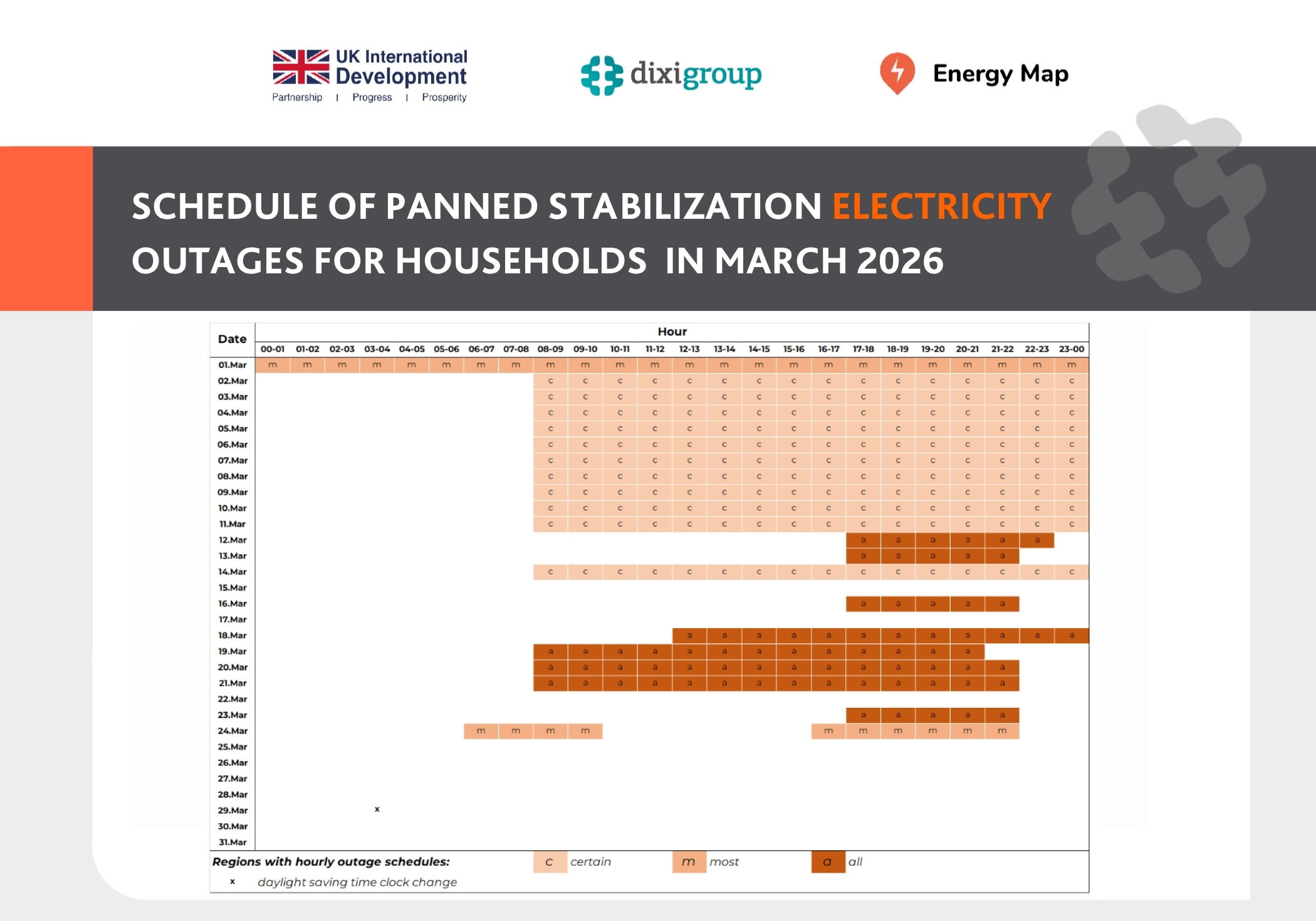
In November, russia conducted four large-scale attacks on Ukraine’s power infrastructure, exacerbating the deficit in the energy system. Hourly power outages were applied daily across most regions or nationwide. For industrial consumers and businesses, load restriction schedules were also in effect. In addition, emergency power outages were implemented 7 times for certain regions, most often for Kharkiv, Sumy, and Poltava regions. Under these conditions, Ukraine was forced to stop electricity exports completely and maintain imports at a consistently high level to meet consumer demand.
Imports
Daily fluctuations in electricity imports are closely correlated with russian strikes on power infrastructure. Peak import volumes typically occur the next day or within two days after such attacks, when available generation decreases and the system’s power deficit grows. For example, following the 30 October attack, imports jumped to 23.6 GWh on 1 November (+86.3% compared to 30 October). A similar pattern occurred after the 8 November strike (+32.9% on 9 November), the 19 November attack (+29.4% on 21 November), as well as after the 25 and 29 November attacks.
Compared to October, Slovakia provided the largest growth in imports in November, with volumes increasing 10.3 times. Supplies from Moldova doubled, and from Hungary increased by 2.5%. Imports from Romania and Poland, on the contrary, decreased by 7.6% and 22.9%, respectively.
Import structure by country:
- Hungary – 184.5 GWh (44,5%);
- Slovakia – 78.6 GWh (19,0%);
- Romania – 71.0 GWh (17,1%);
- Poland – 61.8 GWh (14,9%);
- Moldova – 18.8 GWh (4,5%).
Compared to the same month last year (162.4 GWh), imports increased 2.6 times in November 2025.
Import Capacity Utilization
The maximum agreed commercial import capacity from the EU from December 2024 is 2.1 GW (equivalent to two large nuclear power units). In November 2025, average utilization reached 27.4%, peaking on 1 November between 17:00-18:00 at 88.3% and dropping to a minimum of 5.3% on 8 November between 01:00-02:00. During peak evening demand hours, capacity utilization increases significantly.

It is worth noting that Ukraine reached an agreement with ENTSO-E to increase the maximum cross-border import capacity from 2.1 GW to 2.3 GW beginning in December.
Exports
Electricity exports in November were insignificant and only took place until the 10th. Starting on November 11, supplies completely stopped. The main volumes of exports were carried out at night from 01:00 to 05:00 and in the morning and afternoon – from 09:00 to 14:00.
Export structure by direction:
- Hungary – 3.2 GW (60,8%);
- Slovakia – 0.9 GW (16,6%);
- Romania – 0.6 GW (12,1%);
- Moldova – 0.5 GW (9,0%);
- Poland – 0.1 GW (1,5%).
For comparison, in October this year, exports amounted to 90.8 GW, in November last year – 41.9 GW.
As a result, Ukraine has retained the status of a net importer of electricity for the second month in a row.
The material is made possible by the support of the American people as part of the Energy Sector Transparency Project implemented by DIXI GROUP. The information contained in this material is the sole responsibility of DIXI GROUP and can under no circumstances be taken to reflect the position of the U.S. Government.