On 16 December, DiXi Group summarized the results of the project ‘Municipal Energy Planning for Energy Transition’, supported by the European Climate Foundation (ECF).
Within the project, the team worked across several focus areas. In particular, it sought to improve procedures for collecting and accessing energy consumption data to support more effective community energy planning, as well as to refine the methodology for developing Municipal Energy Plans (MEPs) as a tool for the energy transition. In addition, the project aimed to increase communities’ awareness of financial instruments in the fields of energy efficiency, renewable energy, and sustainable development.

The presentation of the project results took place during the event ‘Energy Transition in Communities: MEPs, Financing, Expertise.’ In her speech, General Manager of Sustainable Development at DiXi Group, Viktoriia Kovalenko emphasized:
“Thanks to the support of our partners, this project went beyond DiXi Group’s analytical work and, over two years, created real impact by shaping solutions, strengthening the institutional capacity of communities, and improving the quality of dialogue among key stakeholders.”
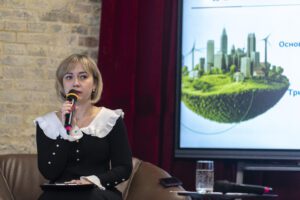
The expert added that the project’s key results are already serving as a practical foundation for further changes in the field of energy and climate policy.
During the project, experts surveyed the communities, which identified one of the key challenges in developing MEPs: the lack of energy consumption data. Currently, for security reasons, energy supply companies do not provide such data. To address this issue, the experts proposed including representatives of energy supply companies in the working groups responsible for developing Municipal Energy Plans, or submitting formal letters to the National Energy and Utilities Regulatory Commission of Ukraine documenting refusals by energy suppliers to provide the required data.
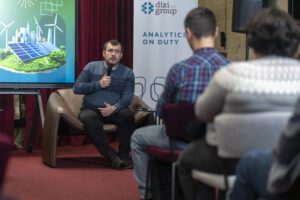
To ensure that the process of preparing MEPs can nevertheless be launched, event participants were encouraged to use DiXi Group’s methodological recommendations for calculating energy consumption data. These were presented by the project expert and Head of the Association of Energy Auditors of Ukraine, Vadym Lytvyn.
“Thanks to these developments, communities will be able to compile a document that is as close as possible to real data, enabling them to begin collecting information and developing MEPs even before the energy management system is launched,” he emphasized.
As a next step, the DiXi Group team will submit its proposals, developed during the project, for amendments to the Methodology for Developing MEPs to the Ministry for Communities and Territories Development of Ukraine for further approval.
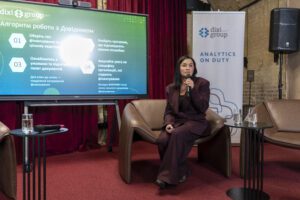
In addition, during the event, project experts presented a unique Guide to Financing Programmes for Energy Efficiency and Renewable Energy Projects. This tool will help communities identify the most suitable projects to finance energy transition initiatives at the local level.
The development of the Financing Programmes Guide became a direct response by the think tank to communities’ needs, as according to a DiXi Group survey, a lack of funding is a barrier to implementing energy efficiency projects for 90% of communities.
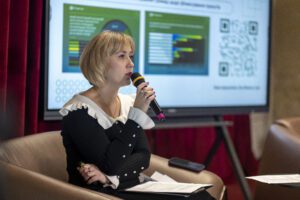
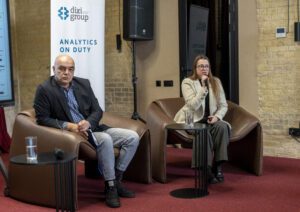
The event also featured a panel discussion on where to look for and how to select financing opportunities for energy efficiency measures. Andrii Ryzvaniuk, a leading expert at UkraineInvest, noted that while community representatives are not required to be financial experts, they must clearly understand what exactly they are offering to a donor, where it can be implemented, and who will be responsible for it. He emphasised that one well-prepared investment case can trigger an entire series of projects and partnerships.
In turn, Alona Korohod, a green policy expert at the Green Transition Office, presented a step-by-step guide on how communities can find financing programmes on the Green Platform. Currently, the platform offers communities access to a broad ecosystem of financial instruments, including more than 20 active grant programmes for the municipal or public sector, homeowners’ associations and housing cooperatives, around 20 concessional lending programmes, as well as special financing mechanisms.
As Viktoriia Kovalenko concluded, the DiXi Group think tank is among the first civil society organizations to respond to communities’ need for support in developing Municipal Energy Plans, an obligation introduced by the Law of Ukraine ‘On Energy Efficiency.’ Since neither approved methodological guidelines nor templates were available at the start of the project, the think tank’s team sought ways to provide communities with professional support throughout the MEP development process. This comprehensive project became possible thanks to the support of the European Climate Foundation.
“Cooperation with DiXi Group is a partnership that always delivers results, for which we are deeply grateful,” noted Oksana Aliieva, Senior Advisor of the European Climate Foundation’s Ukraine Programme. “We hope that the changes developed through this project will be taken into account, making it easier for Ukrainian communities both to plan and to implement municipal energy plans that will directly contribute to the energy independence and sustainability of our country.”



The event was held within the framework of the project ‘Municipal Energy Planning for Energy Transition’ with the support of the European Climate Fund (ECF).