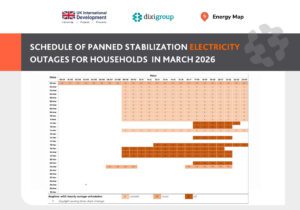
In March, Ukrainians had only 10 days without planned stabilization electricity outages. On March 15, 17, 22, and from 25 to 31, electricity outages were not applied to the households, while limitations were in force on all other days. This assessment is based on a unique dataset compiled within the Energy Map portal using public reports from NPC Ukrenergo.
Source: Energy Map
Overall, during the month, electricity outages were introduced for 284 hours, or 38.2% of the month. Of these:
- 74 hours (10.0%) – for all regions;
- 34 hours (4.5%) – for most regions;
- 176 hours (23.7%) – for certain regions.
Outages were applied mainly from 08:00 to 24:00, most frequently in the evening hours (17:00-22:00). Outages were rarely implemented during night and early morning hours (00:00-08:00).
The reason for these measures was russian missile and drone attacks, which caused a shortage of capacity in the power system. In 2026 alone, russia carried out 15 massive strikes on the Ukrainian power system, including 3 in March (on the 7th, 14th, and 24th).
Compared to February 2026, when electricity outages were applied around the clock every day (the first two weeks – for the entire country, the next two – for most regions), March saw shorter outage durations.
Improved weather conditions helped reduce the load on the system. Higher temperatures led to lower electricity consumption, while increased generation from renewable sources – solar and hydropower – additionally supported the balance. As a result, the transmission system operator NPC Ukrenergo was able to refrain from implementing planned stabilization electricity outages for households during certain hours and days.
* It should be noted that the data are aggregated and may not reflect the specifics of the situation in individual regions.
Within the defined time intervals, outages were applied not to all consumers simultaneously, but in queues. The higher the electricity deficit in the system, the more consumer queues are limited at the same time.
The publication was prepared with the financial support of the UK Agency for International Development under the project “Mainstreaming National Energy and Climate Plan for Ukraine’s Green Recovery and Strengthening the Green Transition Office” implemented by DIXI GROUP NGO. The contents of the publication are the sole responsibility of DIXI GROUP NGO and under no circumstances can be considered to reflect the position of the UK Agency for International Development.