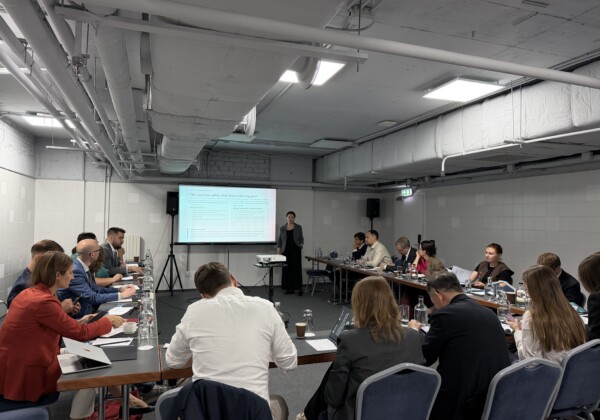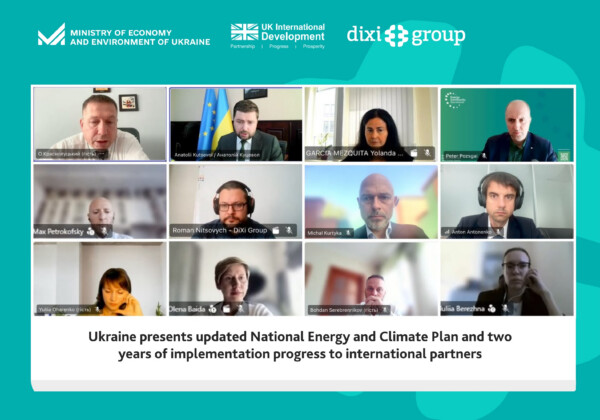
Participants in the panel discussion “How Best to Connect Ukraine with Europe” at the Think Tank Forum, held on the sidelines of the Conference on Ukraine’s Recovery (URC 2026) in Gdańsk.
The discussion, in which Roman Nitsovych, Research Director at DiXi Group, participated, focused on the development of infrastructure projects, the harmonization of regulatory rules, investment priorities, and the geopolitical role of Ukraine’s integration process with the EU.
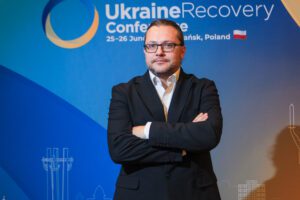
During his presentation, the expert emphasized that in recent years, the country has taken a series of unprecedented steps toward integration with European energy markets. In particular, in the gas sector, the implementation of EU regulations has enabled the launch of virtual connection points, new business models, and cross-border products, which have significantly increased the competitiveness of Ukraine’s gas transmission system and underground gas storage facilities. Roman Nitsovich noted progress in the implementation of gas supply routes – the Vertical Corridor and the expansion of interconnections with Poland, which may take place following an auction for additional capacity.
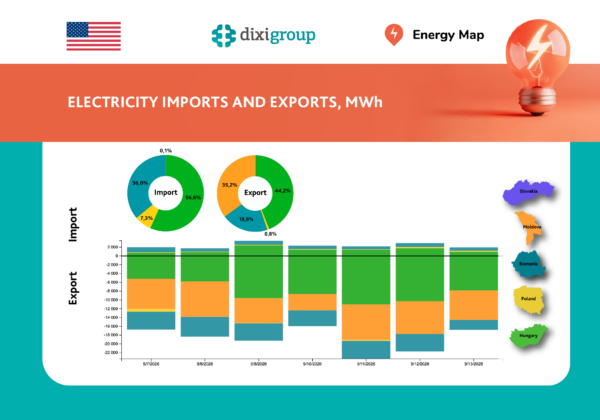
He paid particular attention to the development of integration in the electricity sector. According to the expert, following the synchronization of Ukraine’s power system with the Continental European system in 2022, cross-border power flows have become one of the key elements of Ukraine’s energy resilience. At the same time, full integration (market coupling) requires the adoption of secondary legislation, as well as the implementation of projects to expand the transmission capacity of interconnectors.
“Connectivity in the energy sector is a two-way street. Today, it helps Ukraine maintain resilience amid the war, while in the future, full integration of the gas and electricity markets with the EU will strengthen energy security, competitiveness, and decarbonization across all of Europe,” the DiXi Group expert stated.
Among other points, he emphasized the need for additional financial instruments to reduce investment risk, as well as actual capital investment in energy infrastructure from international financial institutions. This is one of the key findings of the joint position paper by the RRR4U consortium on economic resilience, prepared specifically for URC 2026.
Estonian Foreign Minister Margus Tsahkna, Konrad Popławski, Coordinator for Accession and Regional Integration at the Center for East European Studies (OSW), and Robert Kirchner, Manager at Berlin Economics, joined the discussion.
The participation in the event was supported by the International Renaissance Foundation.
RRR4U (Resilience, Reconstruction and Relief for Ukraine) is a consortium of four Ukrainian civil society organisations: DiXi Group, the Centre for Economic Strategy / CES, the Institute of Analytics and Advocacy, and the Institute for Economic Research and Policy Consulting.